

How to Start a Service Business
Millions of Americans are looking for reliable people to clean their homes, maintain their lawns, walk their dogs, and handle dozens of other recurring jobs they don't want to do themselves. Most of them haven't found someone they trust yet. This guide is about how to become that person in your area, and how to set it up so the income keeps coming.
47+ people found this guide helpful


What a Service Business Actually Is
There are roughly 140 million households in the United States. Most of them need their lawns mowed, their homes cleaned, their gutters cleared, and their dogs walked. Most of them are busy. And a meaningful number of them are actively looking for someone reliable to take care of those things on a regular basis.
From what we've seen, demand for local service businesses isn't the problem. Finding the right person is. In neighborhood after neighborhood, someone with a decent truck and a willingness to show up on time could build a solid business in a matter of months, because the person doing it well simply doesn't exist in that area yet.
A service business is straightforward in concept. You do something people need. You show up reliably. You charge a fair price. And if the service repeats, which most of the best ones do, the income builds without you having to find new customers every week.
The services that work well for this model are ones with regular, repeating demand. Cleaning houses. Mowing lawns. Grooming dogs. Washing windows. Pressure washing driveways. Pool maintenance. Mobile car detailing. Trash can cleaning. And plenty that don't get talked about as often: dog walking, dog waste removal, gutter cleaning, carpet cleaning, appliance cleaning, HVAC filter replacement, pest control. The list is longer than most people realize, and a lot of those work especially well because there's no one established in the neighborhood doing them yet.
Geography shapes which services make the most sense. A pool cleaning business in Phoenix or Miami runs year-round. In Denver, it doesn't. Lawn care in Atlanta goes most of the year. In Minnesota you've got roughly six months of mowing season and six months of potential snow removal. Pick a service that fits your region, understand when the busy periods are, and plan for what the quieter months look like before you commit.
One more thing worth knowing before we get into specifics: HOA neighborhoods are some of the best prospecting territory for most of these services. Homeowners associations have mandatory maintenance standards that residents have to meet regardless of whether they want to. Lawns, driveways, exteriors. Anyone in an HOA community who'd rather not handle their own maintenance has no real choice but to hire someone. That's a concentrated, motivated customer base on almost every suburban street in the country.
What You Actually Need to Start (and What Can Wait)
Here's what we've seen matter in the beginning:
A way to take payment. Cash works at first, but it creates problems quickly. Chasing invoices, forgetting who paid, no record of anything. A simple payment setup from the start saves a lot of headaches. We'll come back to this.
A way for people to find you. This doesn't have to be a full website. A page that shows what you do, what you charge, and how to sign up is enough. Most people looking for a local service aren't going to read through a fancy website. They want to know if you do the thing they need and how much it costs.
Some idea of what to charge. Not perfect pricing. Just a starting number you're comfortable with. You'll adjust it.
A business structure. Sole proprietor is the simplest starting point and requires no formal setup beyond a DBA if you're using a business name other than your own. Many solo operators start this way and formalize into an LLC later. Either works to get your first customer.
A note if you're currently doing work through a platform like TaskRabbit, Thumbtack, or Angi: those platforms are a reasonable way to get early jobs and build reviews while you're getting started. What we've seen, though, is that operators who rely on them long-term tend to earn less and own nothing. The customers belong to the platform. A page of your own, where customers can find you and sign up directly, is the difference between building a business and building someone else's.
Here's what can wait: a logo, business cards, a Facebook page, an LLC (though worth getting to eventually), an accountant (though you'll want one once you're earning consistently).
Get your first few jobs first. The rest follows from there.
Your Business Name and Early Branding
Your own name gets you started. But at some point a business name is worth thinking about.
It doesn't have to be complicated. Something that says what you do, is easy to remember, and looks right on a truck door or a work shirt. That's mostly what you need from it.
The more practical reason to do it early: a business name is something worth protecting once you've built any recognition around it. Waiting until you're busy to sort it out means you might find someone else got there first.
Before you land on a name, check a few things:
State business name register. Your state's Secretary of State website lets you search whether the name is already registered. If it is, move on.
Federal trade marks. A registered business name doesn't automatically protect you from trade mark issues. A quick search at USPTO.gov is worth doing, especially if you're choosing something distinctive.
Domain availability. A .com is the standard expectation in the US. Search for your name at a domain registrar. If the .com is available alongside the business name and social handles, that's a good sign everything lines up.
Social handles. Check Instagram and Facebook at the same time. Finding the same handle available across the name, domain, and socials is worth more than a clever name that's fragmented across platforms. When everything aligns, it's a reasonable signal you've found something worth going with.
A quick note on logos. Creating something passable used to take time and money. A good prompt in ChatGPT or Claude can get you to a workable starting point in a few minutes.
Something like this tends to work:
Create a professional logo for [Business Name], a [lawn care / cleaning / dog grooming] business. Keep it clean and simple. Use [color preference]. It needs to work at small sizes on social media and look good on a truck door and work shirts. Provide 3 or 4 variations.
You'll refine it over time. For now, having something is better than nothing. When you're ready to go further:
Create a brand guide for [Business Name], a [service type] business. Include a primary color palette with hex codes, a secondary palette, font recommendations for headings and body text, logo usage rules, tone of voice guidelines with example phrases, and how the brand should appear on social media, uniforms, and printed materials.
It won't replace a designer. But it gives you something real to work from.
The Legal Basics
This is the section where we'd strongly encourage you to get actual advice rather than relying on a guide. Business structure, tax obligations, licensing, and liability exposure all vary by state, by service type, and by how your business grows. What follows points you in the right direction. A qualified professional gives you advice specific to your situation. The two are not the same thing.
Here's who to talk to and where to find them:
For business structure and general setup, start with a free resource. SCORE (score.org) offers free one-on-one mentoring from retired business executives across the country. Small Business Development Centers (SBDCs) are federally funded consulting centers based at colleges and universities nationwide. Most offer free consultations. Both are genuinely useful and underused. If you're not sure whether to operate as a sole proprietor or form an LLC, either of these is the right first call before you make any decisions.
For taxes, find a CPA who works with self-employed clients. Not a general accountant. A Certified Public Accountant who specifically works with small businesses or self-employed individuals. They'll set you up on quarterly estimated payments to the IRS, help you understand self-employment tax, and make sure you're tracking deductions correctly from the start. The cost of a one-time consultation in your first year is worth it. Ask for a referral in a local small business Facebook group if you don't know where to start.
For contracts and liability questions, a business attorney is worth one conversation. Especially before you take on commercial clients, sign any agreements, or hire anyone. Many business attorneys offer a free initial consultation. One hour with the right person early is cheaper than sorting out a problem later.
A few things worth being direct about:
Business structure matters more than most new operators think. Sole proprietor is easy to start, but it means your personal assets, your savings, your car, your home, are exposed if something goes wrong on the job. A single-member LLC creates a legal separation between you and the business. It's not complicated to form and typically costs $50 to $200 through your state's Secretary of State website. Some states, like California, charge additional annual fees. Whether an LLC makes sense for you depends on your situation. Talk to someone qualified before you decide. Don't default to sole proprietor just because it's easier to start.
Licensing is not optional in many service categories. Pest control requires a state-issued applicator licence in every state. Lawn care that includes chemical treatments such as herbicides or pesticides typically requires licensing as well. Trades like HVAC, electrical, and plumbing are regulated and require licences that vary by state and locality. Operating without the required licence isn't just a legal risk — it can also void your insurance and expose you to liability. Always check what's required before taking your first paid job.
General liability insurance is non-negotiable before your first job. A basic policy runs $400 to $800 per year for most solo operators. It covers you if you damage a client's property or someone is injured during your work. Residential clients increasingly ask for proof of insurance. Commercial clients almost always require it. Some service categories need additional coverage. Talk to an insurance broker who works with service businesses, not just a general online policy.
Health insurance. If you're currently employed and covered through a workplace plan, this is the one that catches people off guard. Going self-employed means sourcing your own coverage. Healthcare.gov and your state's marketplace are the starting points. Factor the cost into your income projections before you leave a job.
EIN. An Employer Identification Number from the IRS. Free, five minutes at irs.gov, and needed if you open a business bank account or hire anyone. Get it early regardless of your structure.
Pricing Your Service
Most people starting out charge too little.
It comes from a reasonable place. You're new. You're not sure if people will pay. You don't want to price yourself out before you've even started.
But underpricing has real costs. You work more hours for less. You attract customers who push back on every invoice. You build a business that isn't sustainable.
Two things are worth looking at when you're setting a price.
The first is what others are charging. Search for your service locally. Look at what established operators charge. Then price in the middle of that range, not at the bottom. The cheapest operator in any market tends to attract the most difficult clients and stay the busiest while earning the least.
The second is what a job actually costs you. Most new operators undercount this significantly. It's not just supplies and materials. It's fuel to get there. Wear on your vehicle and equipment. The time you spend driving between jobs. The time you spend responding to messages and handling admin. Your insurance and registration costs spread across every job you do. Once you know your real cost per job, including all of that, you know your floor. Anything below that floor and you're paying to work.
Travel time is one of the biggest hidden costs in a service business. A job that pays $80 and takes 45 minutes of work sounds reasonable until you factor in 30 minutes of driving each way. Now that $80 job took two hours of your time. Your effective rate just dropped significantly. This is why route density matters so much early on. Ten clients in the same neighborhood are worth more than twenty clients spread across town. Keep your starting territory tight and build density before you expand.
Price per job or per service, not per hour. Hourly pricing shifts the client's attention to the clock rather than the result. It also penalizes you for getting faster as you gain experience. A fixed price per service is cleaner to communicate and simpler to bill automatically.
Think about your upsell and bundle structure before you launch. A lawn care client who also needs their gutters cleared twice a year is worth considerably more than a lawn care client alone. An add-on priced as a flat fee that takes you 20 minutes is pure margin. These don't need to be complicated. They just need to be thought through before you're standing in front of your first client.
And customers who sign up for regular recurring service typically get a lower per-visit rate than one-off customers. That's the trade. They commit to a schedule. You give them a better price. And you get predictable income instead of wondering where next month's work is coming from.
This is what ServiceSubscriber does.
A page, payments, and delivery tracking. Live in 20 minutes.
14-day free trial. No credit card.

Think About How Your Day Actually Works
Most guides skip this part. They help you get started but don't say anything about what starting actually looks like in practice.
Before you take your first customer, it's worth spending an hour thinking through what a full working day looks like. Not perfectly, just roughly. How many jobs can you realistically complete in a day given your service, your setup, and your starting area? What does that translate to in weekly income? Is that number worth doing this for?
Capacity looks different in every service category. A solo house cleaner doing standard cleans might complete two or three homes in a day. A lawn care operator with an efficient route might do eight to twelve yards. A mobile dog groomer might do five to eight appointments. These aren't targets. They're rough shapes that help you understand what you're building toward before you commit to a pricing structure and a client base.
The bigger question is route density. How spread out are your clients? A tight cluster of customers in the same neighborhood or zip code is worth considerably more than the same number of customers scattered across a wide area. Drive time between jobs is time you're not getting paid for. Early on, this is worth being deliberate about. Turn down jobs that are far outside your starting area. Fill in the gaps close to where you already work before you expand outward.
The specific operational detail for each service type, how to structure your day, what to watch for as you scale, where operators typically run into trouble, that's what the individual guides below are for. This section is just a nudge to think about the shape of the business before you're already in it.
Getting Your First Customers
No customers yet? Here's where we'd start.
Tell people you know. Not a formal announcement. Just let it be known that you're doing this now. Family, friends, former coworkers, neighbors. The first few jobs usually come from people who already know you.
Drop door hangers in the neighborhood. Simple ones. What you do, what you charge, how to reach you, a QR code to your page. Print 200. Drop them on a Saturday morning. See what comes back.
Nextdoor. The neighborhood social network. People post service requests there constantly, and recommendations from actual neighbors carry real weight. Introduce yourself to your area, be specific about what you offer and what you charge, and ask your first few satisfied clients to post a recommendation. A handful of genuine neighbor endorsements is worth more than any paid ad in the same zip code.
Local Facebook groups. Most towns and neighborhoods have active ones. Introduce yourself, answer questions, be visible. Don't just post ads. Show up consistently and people start to recognize the name.
Google Business Profile. Free to set up at business.google.com. Fill it out completely. When someone searches for your service in your area, a verified listing with a few reviews means you can show up in local results. Ask your first five customers for a review. Five real reviews puts you ahead of most new operators.
Thumbtack and Angi. Both connect homeowners with local service providers and are a legitimate way to get early jobs while you're building direct traffic. The leads cost money and margins are thinner than direct clients, but they're useful for getting your first customers and reviews while your own page and reputation are getting established. Think of them as a starting point, not a long-term home.
Yard signs. A sign in the yard of every property you're working is a passive advertisement to every neighbor who passes. Ask clients if they're comfortable with it. Most will say yes. One note: HOA communities, which are otherwise great prospecting territory, often have rules restricting yard signs. Check before putting one up in a managed neighborhood.
Ask for referrals. After your first few jobs, ask directly. Most people are happy to recommend someone who did good work. They just need to be asked.
Getting Paid Consistently
The part of service businesses most people don't set up from the beginning is the billing.
Most people start with informal arrangements. They finish a job. They send an invoice. They wait. Sometimes they wait a long time. Then they send a follow-up. It's time-consuming, it's awkward, and it means your income is unpredictable.
There's a better way to set it up from the start.
If your service repeats, your billing can repeat too. A customer signs up for weekly lawn mowing. They pay automatically each week. You show up, do the job, mark it done. No invoice. No chasing. The payment processes before you even arrive.
This is what separates service businesses with consistent income from ones that are always wondering where next month's work is coming from. The work is the same either way. The billing structure is what's different.
It sounds complicated to set up. It doesn't have to be.
Putting It Together
The US has more potential customers for residential and commercial service businesses than almost anywhere in the world. Dense suburban neighborhoods, HOA communities with mandatory maintenance standards, millions of households that are time-poor and willing to pay someone reliable to handle things they don't want to deal with.
The barrier isn't demand. It's getting started.
A skill. A way for customers to find you and pay you. A handful of people you've told. That's the starting point.
The business gets built from there. The first few jobs teach you things. You adjust your pricing. You figure out which customers you want more of. You figure out what your schedule can actually hold.
The operators who build something real didn't wait until everything was in place. They started, which is the part that most people skip.
Ready to start your service business?
Create your service page, share the link, and start getting paid. Customers can sign up once or subscribe for regular service. You get paid directly.
14-day free trial. No credit card. 50% off first 3 months.
Did you find this guide helpful?
More guides
Explore other service businesses you can start

How to Start a Cleaning Business
Low startup costs, reliable recurring demand.
Read guide
How to Start a Lawn Care Business
Weekly recurring work in your own neighborhood.
Read guide
How to Start a Pressure Washing Business
Dramatic results and strong local demand.
Read guide
How to Start a Dog Walking Business
Low startup cost, flexible hours, genuinely recurring.
Read guide
How to Start a Pool Cleaning Business
Technical, recurring, and strong in Sun Belt states.
Read guide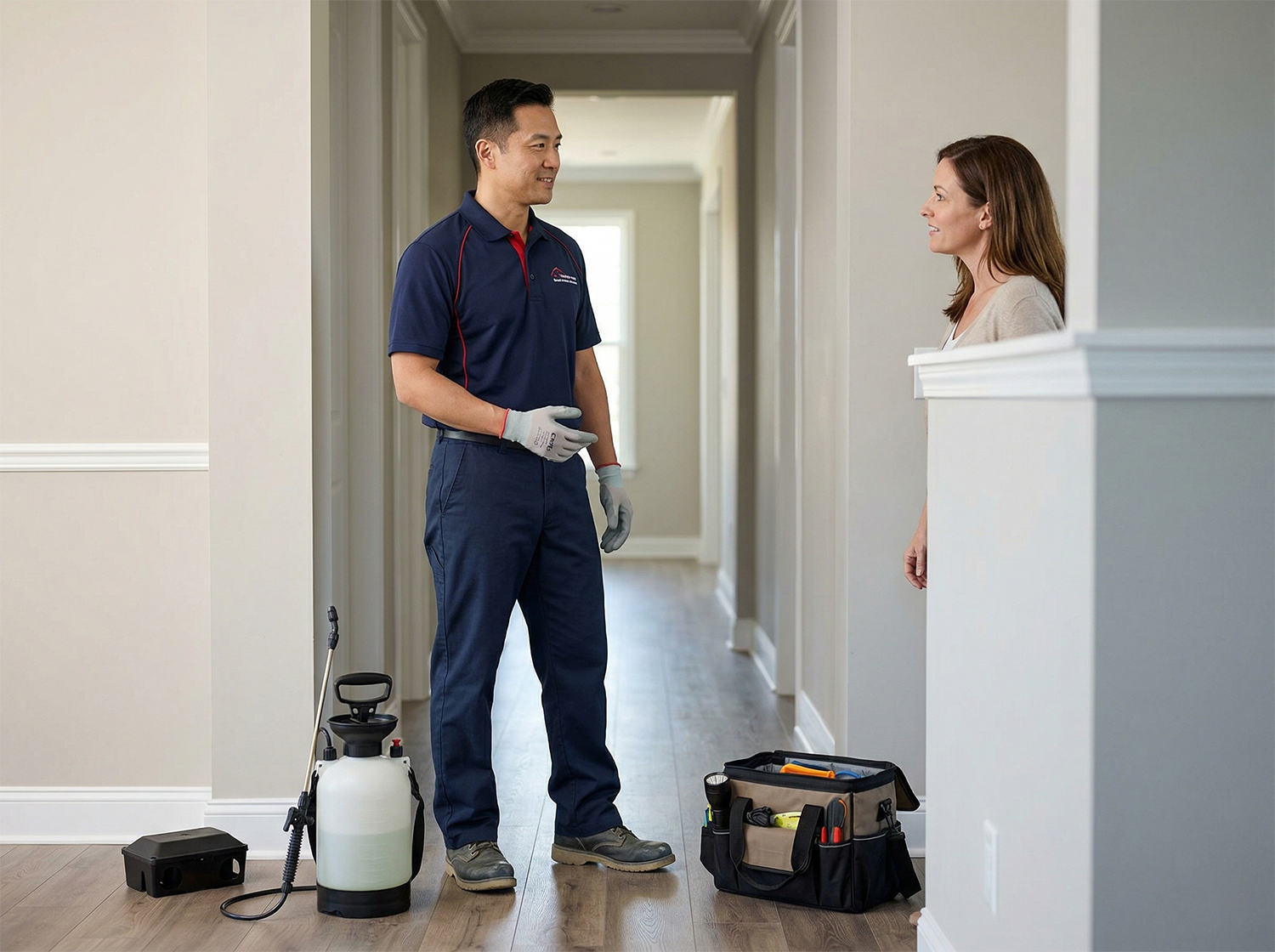
How to Start a Pest Control Business
Seasonal and recurring demand across most of the country.
Read guide