How to Start a Pool Cleaning Business in Australia
Australia has one of the highest rates of pool ownership in the world. Millions of residential pools, plus spas, plunge pools, and strata complexes, all need regular cleaning and maintenance to stay safe and usable. Most pool owners would rather pay someone else to handle it than deal with it themselves. That's a straightforward business opportunity if you're prepared to learn the technical side properly.
31+ people found this guide helpful

Why Pool Cleaning Works as a Business
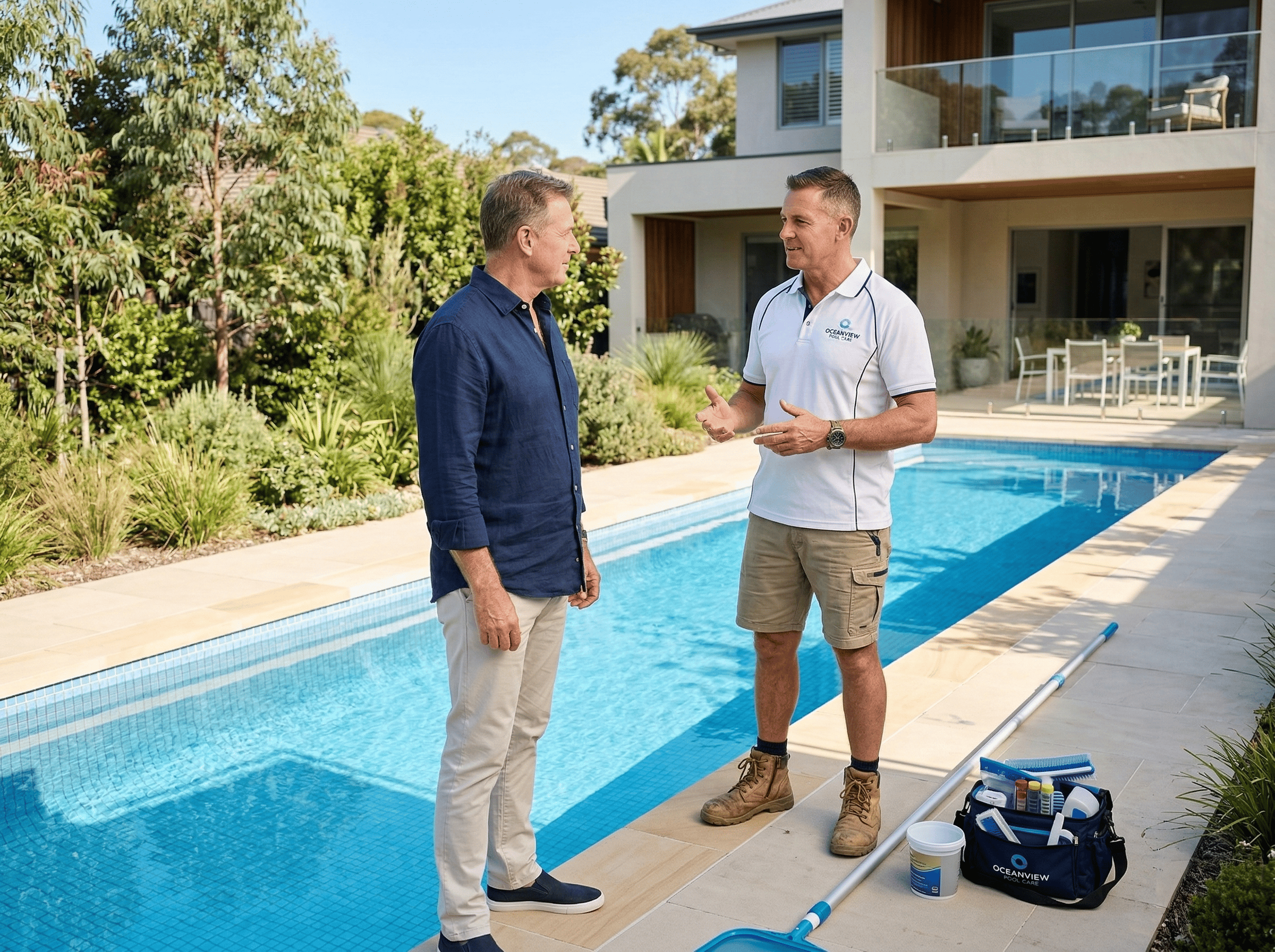
Australia has one of the highest rates of residential pool ownership anywhere in the world. Somewhere between 10 and 13 percent of Australian households have a pool, and in warmer states like Queensland, New South Wales, and Western Australia that figure is higher. That is a large number of pools sitting in backyards, many of them owned by people who would genuinely rather not deal with the ongoing maintenance themselves.
Beyond the traditional backyard pool, spas and plunge pools have become significantly more common in the last decade. Smaller blocks, renovated outdoor spaces, and apartment-adjacent townhouses have driven demand for smaller water features that still require regular care. These are often overlooked by operators who focus exclusively on full-size pools. They are worth understanding and including in your offering from the start.
Strata-managed complexes are another category worth knowing about. Apartment buildings and townhouse developments with shared pools often need a consistent, reliable service they can set and forget. These clients are higher value per visit and tend to stay once you have established a working relationship with a strata manager.
What makes this business genuinely compelling is the recurring nature of the work. A pool that is serviced this week needs servicing again next week or the week after. A subscriber who signs up for a weekly clean stays a subscriber for years if you do the work reliably. That kind of predictable, repeating income is what most service businesses are trying to build toward. In pool cleaning, it is the default.
Mobile, Not a Shop
There are two versions of a pool business. One is a fixed shopfront that sells chemicals, equipment, and accessories alongside a service offering. The other is a mobile operator who drives a route, services pools at residential and commercial addresses, and keeps overheads low.
The fixed shopfront is a retail business with significant setup costs, lease commitments, and a completely different set of challenges. It is not what this guide is about.
The mobile model is where the opportunity sits for someone starting out. A vehicle, the right equipment, a solid understanding of water chemistry and pool maintenance, and a growing route of subscribers. Lower entry cost, no lease, and a business that scales by adding clients to your schedule rather than by hiring staff to run a counter.
Everything in this guide assumes you are building a mobile operation.
Is This the Right Business for You?
Pool cleaning is technical work. That is the thing worth being clear about before anything else. You are not just skimming leaves and topping up water. You are testing and balancing water chemistry, identifying equipment issues, and making judgement calls about what a pool needs to stay safe and clean. Getting that wrong has consequences, for the pool, for the equipment, and potentially for the people using it.
That said, the technical side is learnable. Plenty of people with no background in pool maintenance have built successful businesses by taking the time to get properly trained before they started. The knowledge is accessible. The question is whether you are willing to invest the time in learning it properly rather than figuring it out on the job at a client's expense.
Beyond the technical side, this is outdoor physical work. You will be on your feet, carrying equipment, working around pools in all kinds of weather. You will be managing a route, keeping track of what each pool needs, and building relationships with clients who trust you to look after something they have invested significant money in.
If the technical challenge is interesting rather than off-putting, and if you are comfortable with the idea of building a business that requires genuine expertise rather than just showing up and doing a task, pool cleaning is worth pursuing seriously.
The Technical Side: Get Trained Before You Start
We are not going to walk you through water chemistry, chemical dosing, or equipment diagnostics in this guide. That is not because it is unimportant. It is because it is genuinely complex, and a guide like this is not the right place to learn it. Getting it wrong matters.
What we would suggest instead:
Get formal training. The Swimming Pool and Spa Association of Australia (SPASA) runs training programs specifically for pool and spa technicians. Formal training gives you a foundation, a credential you can reference with clients, and the kind of practical knowledge that comes from instruction rather than trial and error on someone's pool. It is worth looking into before you spend anything on equipment.
Find the communities. There are active online communities of pool and spa technicians in Australia who share knowledge, answer questions, and discuss the realities of running a pool service business. These communities are genuinely useful, particularly when you encounter something unfamiliar on a job. Find them, spend time in them before you start, and keep them close once you do.
Work alongside an experienced operator first if you can. A few weeks or months alongside someone who has been doing this for years is worth more than almost anything else when it comes to building practical competence. If that is an option, take it.
The technical knowledge is what separates a pool cleaning business that clients trust and retain for years from one that gets through the first season and then loses clients when problems emerge. It is the investment that makes everything else in this guide worth doing.
Seasonality and the Year-Round Opportunity
Pool cleaning has a seasonal shape to it. Summer is the peak. Pools are in constant use, the heat accelerates algae growth, and the chemical demands are higher. Clients who have been managing things themselves through winter often want a professional service when the pool starts getting real use again. Enquiries pick up from around September and stay strong through to April in most states.
The winter months are quieter but not empty. A pool that sits unused still needs maintenance. Water chemistry does not stabilise on its own. Algae still grows, equipment still needs checking, and a pool that is neglected through winter is far more work to bring back to swimming condition in spring. Most clients who understand this stay on a service through winter, even if they reduce the frequency.
The clients worth having are the ones who subscribe to a year-round service, not just a summer one. The pitch for year-round maintenance is straightforward: staying on a consistent schedule is cheaper and easier than the rescue job at the start of each season. It is also true. Frame your services around that reality from the start.
Spas and plunge pools smooth out the seasonality somewhat. A spa gets used year-round in most Australian climates. A client with a plunge pool in a renovated backyard uses it in winter as much as summer, particularly in Queensland and New South Wales. These clients are good year-round subscribers and worth targeting specifically rather than treating as an afterthought to standard pool work.
Strata complexes similarly tend to run their pools year-round for resident access. A strata contract is some of the most consistent work you can add to a route.
Research and Plan Before You Start
A clear picture of your market before you spend anything on equipment or marketing is worth the time.
Where will you operate? Define your starting area. Pool density varies significantly by suburb. Established residential areas with older homes tend to have more in-ground pools. Newer developments have fewer standard pools but more spas and plunge pools. Know what is common in your target area before you build your service menu.
What does the local market look like? Search for pool cleaning operators in your area. Most markets have existing operators, which confirms demand. Understand how they present, what they charge, and how they structure their services. Look for gaps. Strata complexes and spa owners are often underserved by operators who focus exclusively on standard residential pools.
What will you start with? Residential pools are the obvious starting point. Spas and plunge pools are a natural adjacent service. Strata is higher value but requires a slightly different sales approach. You do not need to do all of it from day one. Having a clear answer to "what pools do you service and where" makes everything from pricing to prospecting simpler.
Strata and property management relationships. If strata work interests you, it is worth understanding how strata management in your area works before you start approaching body corporates. Most strata-managed complexes deal through a strata manager rather than directly with an owners committee. Understanding that pathway before you start saves time.
Startup Costs
Mobile pool cleaning sits in the mid range for service business startup costs. The technical equipment is not cheap, but it is manageable compared to businesses that require specialist vehicle fitouts or purpose-built trailers.
A realistic breakdown for a mobile setup:
- ABN registration — Free
- Business name registration (ASIC) — Around $42 for one year, $98 for three years
- Domain name (.com.au or .au) — $20 to $50 per year
- Public liability insurance — $800 to $1,500 per year
- SPASA training or equivalent — $500 to $2,000 depending on the program
- Telescopic pole, brush, net, and leaf rake — $300 to $600
- Manual vacuum head and hose — $200 to $500
- Water testing kit (digital reader) — $100 to $400
- Chemical starter kit (chlorine, pH adjusters, algaecide, clarifier) — $400 to $800
- Chemical storage and transport (compliant containers) — $100 to $300
- Service report cards or tablet — $0 to $300
- Branded clothing — $100 to $200
- Vehicle signage — $200 to $600
- Flyers and door hangers — $100 to $200
- Platform or payment system — $18 to $39 per month
- Logo and basic branding — $0 if you use AI tools, $200 to $500 if you use a designer
A realistic all-in starting figure is $3,500 to $7,500, not including your vehicle. Training is a significant line item here compared to some other service businesses, and it is worth treating as non-negotiable rather than something to skip or defer. It is the thing that makes the rest of the investment worthwhile.
As the route grows, a robotic pool cleaner is worth adding to your kit. It handles the vacuuming while you focus on testing, chemical balancing, and maintenance tasks, which makes each visit more efficient. Start without one if budget is a constraint and add it once the route is generating consistent income.
Your Brand
Pool cleaning is a trust-based business. Clients are handing you ongoing access to their backyard and trusting you to look after something they have invested real money in. A professional brand signals that you take the work seriously, which matters more here than in some other service categories.
Before you settle on a name, run the standard checks:
ASIC business name register. Search at business.gov.au. If it is taken, move on.
Trade marks. A quick check at ipaustralia.gov.au before you invest in signage and branding is worth doing.
Domain availability. A .com.au or .au extension. Check it before you commit to the name.
Social handles. Instagram and Facebook at the same time. When the name, domain, and handles all align, register everything.
On logos, a good prompt in ChatGPT or Claude gets you somewhere useful quickly:
Create a professional logo for [Business Name], a mobile pool cleaning and maintenance business in Australia. Clean, modern, and trustworthy. Use [colour preference]. It needs to work on a vehicle door, a work shirt, and a service report. Provide 3 or 4 variations.
When you are ready to go further:
Create a brand guide for [Business Name], a mobile pool and spa cleaning business in Australia. Include a primary colour palette with hex codes, a secondary palette, font recommendations for headings and body text, logo usage rules, and how the brand should appear on vehicle signage, uniforms, service reports, and social media.
Insurance, Licences, and Permits
We are not lawyers or insurance brokers. Get specific advice for your situation. Here is what is worth sorting out before you start.
Public liability insurance. You are working at residential and commercial properties, handling chemicals, and being held responsible for the condition of water that people swim in. Public liability insurance is not optional. Get it before your first job.
Chemical handling. Pool chemicals, particularly chlorine and pH adjusters, are classified as hazardous substances. There are requirements around how they are stored and transported. A compliant storage setup in your vehicle is not just a regulatory matter. It is a safety one. Understand what applies in your state before you start carrying chemicals.
Licensing requirements. Requirements for pool technicians vary by state. Some states have specific licensing or certification requirements for people who service pools commercially. SPASA is a good starting point for understanding what applies in your state. Check current requirements directly rather than relying on this guide, as regulations change.
Working near pools with children present. If you are servicing pools at properties where children may be present, understand your obligations around pool barrier compliance. You are not a pool inspector, but knowing what safe barriers look like and what to do if you identify an obvious issue is worth being across.
Vehicle and equipment insurance. Your kit represents a meaningful investment. Make sure your vehicle policy covers commercial use and that your equipment is covered.
Define Your Services and Pricing
The goal is a clear, fixed-price menu that clients can choose from and subscribe to without any back and forth. Pool cleaning structures naturally for this. The variables are pool type, size in some cases, and service frequency. Define those clearly and you have a menu most clients can self-select from.
A sensible starting structure:
- Weekly Pool Service. Your core subscription. Skim, brush, vacuum, test and balance water chemistry, check equipment. For clients who want the pool in constant ready-to-swim condition.
- Fortnightly Pool Service. The most common subscription frequency for clients who do basic upkeep between visits. Same service scope as weekly, adjusted price.
- Monthly Pool Service. Suits pools with lower use or clients who reduce frequency through winter. A natural option for year-round subscribers who adjust seasonally.
- Spa and Plunge Pool Service. Weekly or fortnightly. Spas and plunge pools have smaller water volumes and higher bather loads relative to their size, which means water chemistry needs more frequent attention than a standard pool. Price accordingly.
- Green Pool Recovery. A pool that has gone to algae bloom needs a rescue treatment before regular maintenance can resume. A natural one-off purchase option on your page rather than a subscription entry point. It is also a natural lead-in to a regular subscription once the pool is back to condition.
- Strata and Commercial. Apartment complexes and commercial properties with shared or multiple pools. Higher value, recurring, and best handled via a private subscription invite with a custom price rather than a public listing.
On pricing: understand your local market and your own costs before you set prices. Factor in chemicals, fuel, your time including travel, and the liability you are carrying. Local operators provide a reference point, but do not anchor to them uncritically. If your costs are different or your service quality is higher, price accordingly.
For pools of meaningfully different sizes, a tiered structure makes sense. Small, standard, and large pool tiers with different prices handles that variation while keeping the menu clean and easy to navigate.
This is what Service Subscriber does
A page, payments, and delivery tracking. Live in 20 minutes.
14-day free trial. No credit card.

Equipment
You do not need to buy everything at once. A functional starting kit covers the core tasks. Add to it as the route grows and specific client needs become clear.
Cleaning tools. A telescopic pole with interchangeable heads is the backbone of manual pool cleaning. A brush for walls and floor, a leaf rake for surface skimming, and a vacuum head for the floor. Good quality poles and heads are worth spending on. Cheap equipment breaks and costs you time on a job.
Vacuum hose. A long enough hose to reach the full pool from the edge. Length requirements vary by pool size. Carry more than you think you will need.
Water testing. Accurate testing is the foundation of correct chemical dosing. Digital testers give more precision than test strips and are worth the investment for a professional setup. The specific parameters you are testing for, and how to interpret and respond to the results, are part of the technical training rather than this guide.
Chemicals. Your starting kit covers the core treatments. What you carry and in what quantities depends on the size of your route. Buying chemicals through a trade account rather than retail reduces costs meaningfully at scale.
Robotic pool cleaner. Not a day-one requirement but a meaningful efficiency gain once the route is established. A robotic cleaner handles the vacuuming autonomously while you handle testing, dosing, and skimming. On a route of ten or more pools, the time saving adds up significantly.
Service records. Keeping a record of each pool's water chemistry readings and what you added at every visit is good practice and protects you if a client queries something later. A tablet with a simple app or spreadsheet does the job.
Getting Your First Clients
Pool owners who are managing maintenance themselves are your first target. Most of them do not love doing it. The question is whether they know a reliable service exists in their area. Making them aware is most of the work.
Door to door in pool-dense streets. Older suburban streets with large blocks tend to have high pool ownership. A polite knock, a brief introduction, and a clear explanation of what you offer and what it costs. Most people who are managing their own pool and would rather not will at least take a card. Some will sign up on the spot.
Door knob hangers. A flyer on the door handle of every house in your target streets. What you do, what you charge, a QR code to your page. Timing matters here. Drop them in late August or September as the weather warms and pool owners start thinking about the season ahead. That is when the problem is top of mind.
Local Facebook community groups. Introduce yourself in suburb groups. Be specific about where you operate, what you service, and what you charge. Offer to answer questions about pool maintenance. Being genuinely helpful in these groups builds trust in a way that a straight advertisement does not.
Strata managers. A professional introduction to strata managers in your area with a clear service description and fixed pricing for shared pool maintenance. Strata managers deal with multiple properties and multiple service providers. A reliable pool technician who makes their life easier tends to keep that contract for a long time. This is a relationship worth building.
Real estate property managers. Investment properties with pools often need a pool service attached to the tenancy. Property managers who manage multiple rentals with pools are another source of recurring contract work. A direct introduction with a clear service offering is worth the effort.
Ask for referrals. Pool owners talk to other pool owners. After your first few subscribers, ask directly. Most satisfied clients will refer you to a neighbour or friend if you ask rather than leaving it to chance.
Give Customers a Way to Subscribe
When someone scans your QR code from a door hanger or finds your page after a neighbour mentioned you, they should land somewhere that shows what you offer, what you charge, and lets them subscribe without having to call you or wait for a response.
The entire experience after sign-up should be routine. Client subscribes, payment processes automatically on the billing date, you show up on schedule, service the pool, mark it done. No invoicing. No chasing. No back and forth about when you are coming.
Services and pricing upfront. Clients choose their pool type and frequency, subscribe, and pay at checkout. You get notified. You add them to your route. For strata complexes or commercial properties with non-standard requirements, a private subscription invite with a custom price keeps the arrangement clean without cluttering your public page.
Make the First Visit Count
The first service sets the expectation for everything that follows. Pool owners who have had unreliable or inconsistent service in the past are paying attention to whether you show up when you said you would, whether the pool looks noticeably better after you leave, and whether you communicate clearly about what you found and what you did.
Be on time. First impressions in a subscription service carry more weight than in a one-off job. The client is deciding whether to trust you with their pool for the foreseeable future. Showing up when you said you would is the first signal that you are reliable.
Leave the pool clean and balanced. The result should be obvious. Clear water, a clean floor and walls, and chemistry that is in the right range. If the pool was in poor condition when you arrived, note it and explain what you did and what follow-up may be needed.
Leave a service report. A brief note of the water chemistry readings, what you added, and the condition of the equipment. It demonstrates professionalism, builds trust, and creates a record that is useful on future visits. A physical card left by the pool or a short message sent after the visit both work.
Flag anything that needs attention. If you notice equipment that is not working correctly, a filter that needs servicing, or any other issue, mention it. Being the person who notices and communicates problems before they become bigger ones is a large part of the value clients are paying for.
Getting Paid Consistently
A subscription-based pool cleaning route is one of the more predictable service businesses you can build. The client subscribes. The payment processes automatically. You show up on schedule, service the pool, mark it done. No invoice to send. No payment to follow up. No wondering whether a client will reach out again before the algae blooms.
As the route grows, that predictability compounds. Twenty weekly subscribers is a known weekly income before the week starts. Forty is a materially different financial position than a business where every week begins from zero.
The seasonal shape of pool cleaning is real, but it is less pronounced for operators who position year-round maintenance correctly from the start. The pitch is simple: staying on a consistent schedule through winter costs less than the rescue job at the start of each season. Most clients who understand that stay subscribed year-round. Focus your early marketing on clients who want to set it and forget it rather than those looking for a summer-only service.
Green pool recovery and one-off treatments are a natural entry point for clients who are not yet subscribed. List these as a one-off purchase option on your page. They often convert to subscriber relationships once the pool is back in condition and the client has seen how the service works.
Putting It Together
Pool cleaning is a business that rewards people who take the technical side seriously. Get trained before you start. Find the communities where experienced operators share knowledge. The investment in learning is what turns the equipment and the route into something clients trust and retain for years.
Start mobile, start residential, and build from there. Spas and plunge pools are a natural addition once you are comfortable with standard pools. Strata and commercial work is worth pursuing as the route matures. Keep your service area as dense as you can. A tight geographic route with consistent subscribers is worth more than a wide one with scattered clients.
Get your page live before you start dropping door hangers. Price clearly. Make subscribing the default. Leave a service report on every visit. Show up when you say you will.
The pool owners are out there. Most of them would rather pay someone else to handle the maintenance. The ones who find you and trust you will stay for a long time.
Ready to start your pool cleaning business?
Create your service page, share the link, and start building your route. Clients subscribe, payment processes automatically, and you show up and do the work. That's the whole thing.
14-day free trial. No credit card. 50% off first 3 months.
Did you find this guide helpful?
More guides
Explore other service businesses you can start