

How to Start a Service Business in Australia
Most people who want to start a service business don't end up starting one. Not because they can't do the work. It's usually because they don't know where to begin. Here's what actually matters in the first few months, in the order it tends to matter.
24+ people found this guide helpful

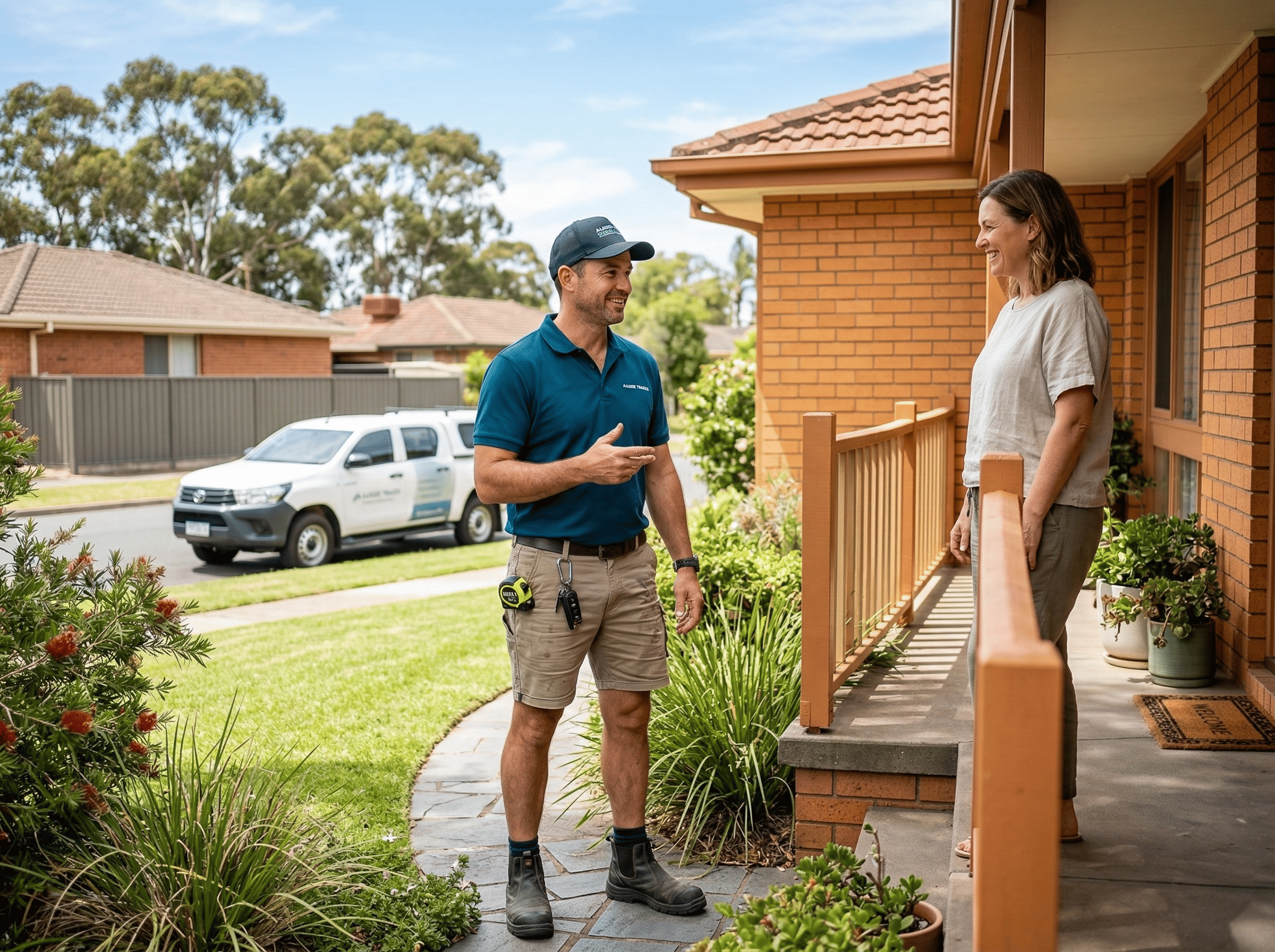
What a Service Business Actually Is
If you have a skill that helps someone with something they'd rather not do themselves, you have the foundation of a service business.
Cleaning houses. Mowing lawns. Grooming dogs. Washing windows. Pressure washing driveways. Pool maintenance. Mobile car detailing. Personal training. Tutoring. Meal prep.
The list is long. Most of these don't require a big investment to start. Most of them repeat. The lawn grows back. The house gets dirty again. The dog needs grooming next month.
That repetition is the most underrated part of service businesses. You don't have to find new customers every week if your existing ones keep coming back. And with the right setup, you can turn those repeat customers into subscribers before you've even finished your first month.
What You Actually Need to Start (and What Can Wait)
Here's what we've seen matter in the beginning:
An ABN. You'll need an Australian Business Number before you start taking money. It's free to register at abr.gov.au and takes about ten minutes online. You don't need a registered business name to get one. Your own name works fine to begin with.
A way to take payment. Cash works at first, but it creates problems quickly. Chasing invoices, forgetting who paid, no record of anything. A simple payment setup saves a lot of headaches. We'll come back to this.
A way for people to find you. This doesn't have to be a full website. A page that shows what you do, what you charge, and how to get in touch is enough. Most people looking for local services aren't going to dig through a fancy website. They want to know if you do the thing they need and how much it costs.
Some idea of what to charge. Not perfect pricing. Just a starting number you're comfortable quoting. You'll adjust it.
Here's what can wait: branded uniforms, business cards, a Facebook page, an accountant (though you'll want one eventually, especially as you approach GST territory).
Get your first few jobs first. The rest can follow.
Your Business Name and Early Branding
Your own name gets you started. But at some point, a business name is worth thinking about.
It doesn't have to be complicated. Something that says what you do, is easy to remember, and looks right on a van door or a work shirt. That's mostly what you need from it.
The more practical reason to do it early: a business name is a piece of intellectual property. Once you have it registered, it's yours. Waiting until you're busy to sort it out means you might find someone else got there first.
Before you land on a name, check a few things:
ASIC business name register. business.gov.au lets you search whether the name is already registered in Australia. If it is, that's a hard stop.
Trade marks. A registered business name doesn't automatically protect you from trade mark issues. A quick search at ipaustralia.gov.au is worth doing, especially if you're choosing something distinctive.
Domain availability. In Australia, you don't need a .com. A .com.au or the newer .au extension is well recognised and often what people expect from a local business. Search for your name at a domain registrar. If the .com.au is available alongside the business name and social handles, that's a good sign everything lines up.
Social handles. Check Instagram, Facebook, and TikTok while you're at it. Finding the same handle available across the name, domain, and socials is worth more than a clever name that's fragmented across platforms. When everything aligns, it's a reasonable signal you've found something worth going with.
A quick note on logos. Creating something passable used to take time and money. These days, a good prompt in ChatGPT, Claude, or similar tools can get you to a workable starting point in a few minutes.
Something like this tends to work well:
Create a professional logo for [Business Name], a [lawn care / dog grooming / cleaning] business. Keep it clean and simple. Use [colour preference]. It needs to work at small sizes on social media and look good on a vehicle door sign and work shirts. Provide 3 or 4 variations.
You'll refine it over time. For now, having something is better than nothing. When you're ready to go further, a brand guide prompt can give you a full starting kit:
Create a brand guide for [Business Name], a [service type] business. Include a primary colour palette with hex codes, a secondary palette, font recommendations for headings and body text, logo usage rules, tone of voice guidelines with example phrases, and how the brand should appear on social media, uniforms, and printed materials.
It won't replace a designer. But it'll give you something to work from.
The Legal Basics in Australia
We're not accountants or lawyers. This is what we've seen most service businesses need to sort out early. Confirm the specifics with someone qualified.
ABN. Register at abr.gov.au. Free. Takes minutes.
Business structure. Operating as a sole trader is one way to get going with minimal red tape. There's no separate business registration required, no complex reporting structure to set up. Your ABN covers you. As you grow, a company structure may make sense for tax and liability reasons. That's a conversation for an accountant when the time comes.
GST registration. You're required to register for GST once your annual turnover hits $75,000. Below that threshold, registration is optional. Worth thinking through early though. If you're forecasting reasonable growth, consider what adding 10 percent to your prices later looks like to customers who are already used to what you charge. Some people prefer to register early and price with GST included from the start, so there's no awkward conversation down the track. Talk it through with an accountant, even a one-off conversation, before you land on an approach.
Insurance. This is one to take seriously from the start, particularly if you're working on someone else's property, home, car, or with their animals or belongings. Public liability insurance protects you if something goes wrong, and in many cases clients will ask to see it before they book. It's often more affordable than people expect. Don't wait until something happens to find out you needed it.
Licences. Some services require specific licences. Electrical work. Plumbing. Building and construction trades. Others don't. Check what applies to your specific service in your state or territory.
Pricing Your Service
Most people starting out charge too little.
It comes from a reasonable place. You're new. You're not sure if people will pay. You don't want to price yourself out before you've even started.
But underpricing has real costs. You work more hours for less. You attract customers who haggle. You build a business that isn't sustainable.
There are two things to look at when you're setting a price.
The first is what others are charging. Search for your service locally. Look at what established operators quote. Then price in the middle of that range, not at the bottom.
The second is what it costs you to do the job. Direct costs. The fuel to get there. The products or materials used. Any equipment you're running through. Your time, including travel. Once you know what a job actually costs you, you know what the floor is. Anything below that and you're paying to work.
You can always go up. It's harder to go up if you've trained your customers to expect cheap.
One more thing worth knowing: customers who subscribe to a regular service typically pay a lower per-visit rate than one-off customers. That's the trade. They commit to regular bookings. You give them a better price. And you get predictable income instead of wondering where next month's work is coming from.
This is what Service Subscriber does
A page, payments, and delivery tracking. Live in 20 minutes.
14-day free trial. No credit card.

Getting Your First Customers
No customers yet? Here's where we'd start.
Tell people you know. Not a formal announcement. Just let it be known that you're doing this now. Family, friends, former colleagues, neighbours. The first few jobs usually come from people who already know you.
Drop flyers in the neighbourhood. Simple ones. What you do, what you charge, how to reach you, a QR code to your page. Print 50. Drop them on a Saturday morning. See what happens.
Nextdoor. The local neighbourhood app. People post service requests there constantly. Create a free profile and introduce yourself to your area.
Facebook community groups. Most suburbs have one. Introduce yourself, answer questions, be visible. Don't spam. Just show up consistently.
Ask for referrals. After your first few jobs, ask if your customer knows anyone who might need the same. Most people are happy to recommend someone who did good work. They just need to be asked.
A note on gig platforms. TaskRabbit, Airtasker, and others can get you started. They also take 15 to 30 percent of every job. Some people find them useful for building up initial reviews and experience. Others find it's a difficult place to build something that's actually yours. If you use them, think of it as a starting point, not a destination.
Getting Paid Consistently
The part of service businesses most people don't set up from the beginning is the billing.
Most people start with informal arrangements. They finish a job. They send an invoice. They wait. Sometimes they wait a long time. Then they send a follow-up. It's time-consuming and awkward, and it means your income is unpredictable.
There's a better way to set it up from the start.
If your service repeats, your billing can repeat too. A customer subscribes to weekly lawn mowing. They pay automatically each week. You show up, do the job, mark it done. No invoice. No chasing. The money arrives before you do the work.
This is what separates service businesses with consistent income from ones that are always wondering where next month's jobs are coming from. The work is the same either way. The billing structure is different.
It sounds complicated to set up. It doesn't have to be.
Putting It Together
Service businesses in Australia are started with less than you'd think.
A skill. An ABN. Some way for customers to find you and pay you. A handful of people you've told.
That's roughly the starting point.
The business gets built from there. The first few jobs teach you things. You adjust your pricing. You figure out which customers you want more of. You start to understand what your schedule can actually hold.
The people we've seen do this well didn't wait until everything was perfect. They figured it out as they went, which is mostly how it works.
The best time to start is probably sooner than feels comfortable. That's been true for most people who've done it.
Ready to start your service business?
Create your service page, share the link, and start getting paid. Customers can buy one-off or subscribe for regular service. You get paid directly.
14-day free trial. No credit card. 50% off first 3 months.
Did you find this guide helpful?
More guides
Explore other service businesses you can start

How to Start a Cleaning Business
Low startup costs, reliable recurring demand
Read guide
How to Start a Lawn Care Business
Seasonal work with predictable customer schedules
Read guide
How to Start a Dog Grooming Business
Loyal customers, mobile or salon setup
Read guide
How to Start a Pressure Washing Business
Higher equipment investment, dramatic visible results
Read guide
How to Start a Car Detailing Business
Mobile service with strong subscription potential
Read guide
How to Start a Mobile Barber Business
Flexible schedule with professional clientele
Read guide
How to Start a Window Cleaning Business
Straightforward service with visible results
Read guide
How to Start a Bin Cleaning Business
Niche service with growing demand
Read guide
How to Start a Pool Cleaning Business
Technical service with loyal customers
Read guide