
How to Start a Pet Waste Removal Business
Pet waste removal is one of the simplest recurring service businesses there is. Low startup cost, no animal handling, no formal skills required, and still underserved in many residential areas. The work is unglamorous by design. That's exactly why people pay for it.
31+ people found this guide helpful

Why Pet Waste Removal Works as a Business
Americans own somewhere north of 90 million dogs. Those dogs produce waste every single day. A significant portion of that waste ends up in backyards owned by people who would genuinely rather pay someone to deal with it than deal with it themselves. That's a recurring weekly need across most suburban neighborhoods in the country.
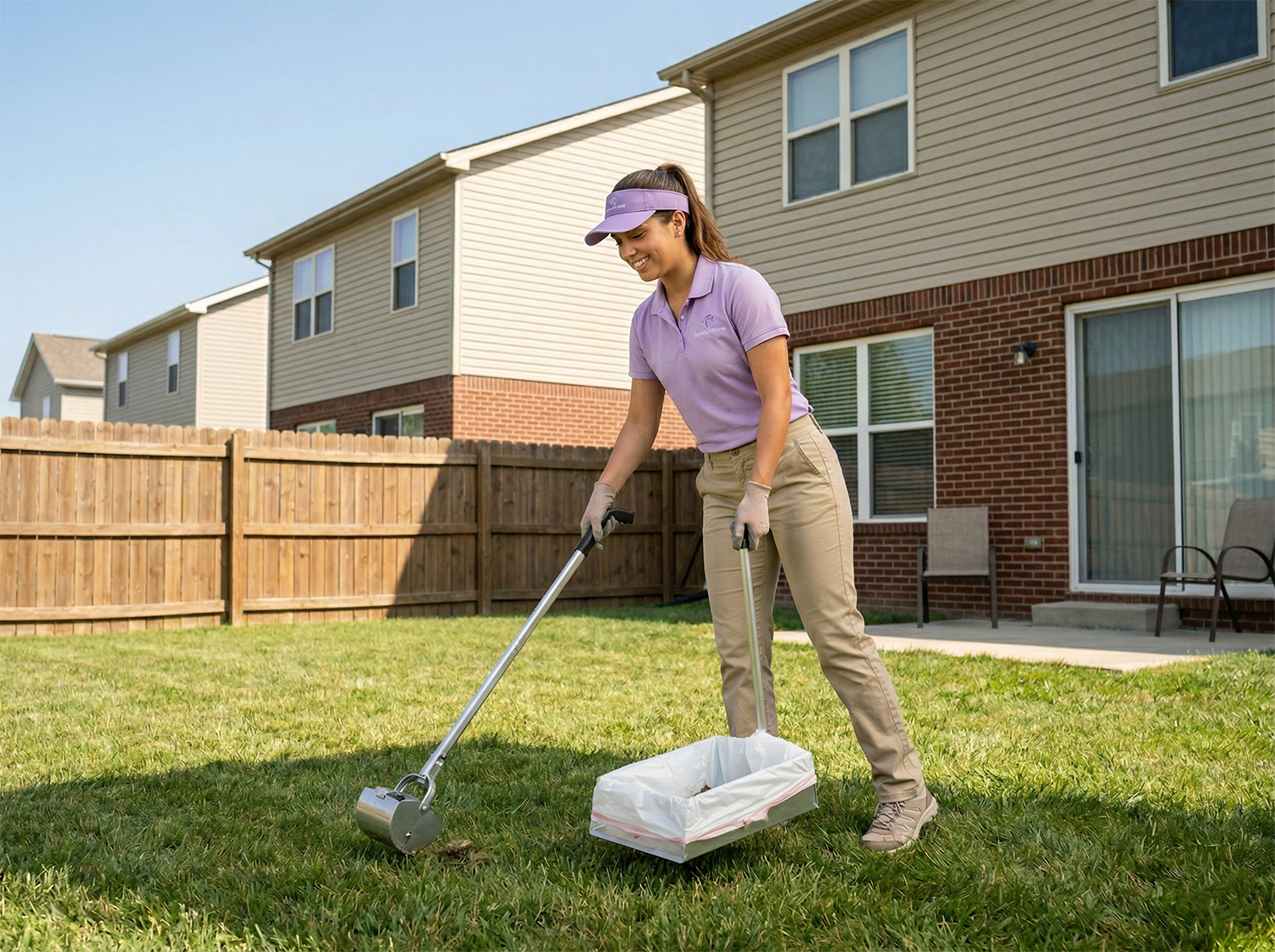
What makes this category interesting as a business is how clean the operating model is. You show up on a weekly schedule, scoop the yard, dispose of the waste, leave. The job is simple, the time per yard is short, and the route builds in a way that makes each additional client incrementally more valuable. A dense route of weekly clients in a tight geographic area is a predictably structured working week before you've taken a single call.
The unglamorous nature of the work is also a feature. Most people who would otherwise consider starting a service business don't think about pet waste removal. That means competition is still light in many markets compared to lawn care, cleaning, or dog walking, though the category is growing. Operators who get in, build a tight route, and show up reliably are doing well here specifically because fewer people pursue it.
If the idea of running a simple, recurring, route-based business that grows through referrals and doesn't require specialist skills or expensive equipment appeals to you, this is worth taking seriously.
Is This the Right Business for You?
Pet waste removal is about as straightforward as service businesses get. You don't need to handle animals. You don't need a trade qualification. You don't need expensive equipment. You need a willingness to do work that most people don't want to do, a reliable schedule, and the discipline to treat it like a real business rather than a side job.
The work is physical and outdoors in all weather. Yards in summer heat are a different experience than yards in a wet November. If you can handle that without it becoming a reason to skip clients or cut corners, you're suited to it.
Route density is everything in this business. The more clients you have on the same street or in the same neighborhood, the more efficient each working hour becomes. Someone who builds 40 weekly clients in two adjacent neighborhoods is running a genuinely profitable business. Someone with the same 40 clients spread across a wide area is spending too much time between stops.
If you want a business with a clear, repetitive model, predictable income, and real room to grow through referrals and density, this is a strong option. You just have to be comfortable with what the job actually involves.
Research and Plan Before You Start
A one-page plan before you start is worth the time even for a business this simple.
Where will you operate? Start tight. Suburban neighborhoods with houses, backyards, and high dog ownership density are your market. Apartment-heavy urban areas are harder to serve because many residents don't have private yards. Newer subdivisions with smaller lots and high family density are often good starting territory.
What collection day cadence will you run? Most residential clients want weekly service. The simpler your schedule, the more efficiently you can route. Starting with a single operating day in one target neighborhood before expanding is a sensible way to build density before spreading wider.
What does the local market look like? Search for pet waste removal businesses in your area. In many markets the category is genuinely underserved and a quick search confirms it. Where operators do exist, look at how they present and what they charge. Reliability and consistency are the most common gaps, the same opening that exists in pool cleaning and dog walking.
Commercial opportunities. Dog parks, apartment complexes with dog areas, and HOA communities with shared green spaces are all worth noting as the residential route matures. These tend to be higher volume and more frequent than residential, and best approached once you have a track record and references to point to.
Startup Costs: What to Expect
Pet waste removal has the lowest startup cost of any service business in this guide series. Here's a realistic breakdown:
- Business registration (LLC or DBA filing) — $50 to $200 depending on your state
- EIN from the IRS — Free
- General liability insurance — $300 to $600 per year
- Scooping tools (rake, spade, scoop) — $30 to $80
- Waste bags (commercial supply) — $30 to $60
- Bucket or sealed waste container for transport — $20 to $50
- Disinfecting spray for tools — $15 to $30
- Protective gear (gloves, boot covers) — $20 to $40
- Branded clothing — $50 to $100
- Door hangers and flyers — $75 to $150
- Domain name (.com) — $15 to $20 per year
- Platform or payment system — $18 to $39 per month
- Logo and basic branding — $0 if you use AI tools, $150 to $400 if you use a designer
A realistic all-in starting figure is $600 to $1,200. The lowest barrier to entry of any outdoor service business. Everything fits in a standard vehicle. No trailer, no tank, no specialist kit. Get your page live, drop some door hangers, and start building the route.
Your Brand
Branding for a pet waste removal business has a bit more latitude for personality than most. The category lends itself to names and taglines that are self-aware and a little playful without undermining professionalism. Many successful operators in this category lean into the humor. It can work. What matters is that it still looks like a real business rather than a casual side operation.
Before you settle on a name, run the standard checks:
State business name register. Your state's Secretary of State website. If it's taken, move on.
Federal trade marks. A quick check at USPTO.gov before you invest in signage and materials.
Domain availability. A .com. Check it before you commit to the name.
Social handles. Instagram and Facebook at the same time. When the name, domain, and handles all align, register everything and move on.
On logos:
Create a professional logo for [Business Name], a pet waste removal business. Clean, friendly, and memorable. Use [color preference]. It needs to work on a t-shirt, a door hanger, and a website. Provide 3 or 4 variations. The tone can be slightly playful but it still needs to look professional.
Insurance and Business Setup
We're not lawyers or insurance brokers. Get specific advice for your situation.
General liability insurance. You're entering private residential properties regularly. A client trips on wet grass after your visit, something gets damaged in the yard, a gate is left unlatched and the dog gets out. General liability insurance covers you when things go wrong at a client's property. Get it before your first job. It's inexpensive in this category, typically $300 to $600 per year for a solo operator.
Waste disposal. Pet waste collected across multiple residential properties can't always go in a standard residential trash can, and the rules vary significantly by municipality. Some areas are relaxed about bagging at each client's property and leaving it with their household trash. Others have specific requirements around commercial waste disposal. Check your local municipal and county rules explicitly before you start operating commercially, and revisit as your volume grows.
Business structure. Many operators start as sole proprietor and formalize later. A brief conversation with a free SCORE mentor about sole proprietor versus LLC before you take your first client is worth the time.
Gate access and property entry. You'll need a simple system for clients to provide gate codes or key access. A basic client intake form or note in your scheduling system is enough. Equally important: always close gates behind you. A dog escaping because a gate was left open is the most serious incident risk in this business.
Define Your Services and Pricing
Pet waste removal is one of the most naturally productized service businesses. The variables are the number of dogs, the property size, and the service frequency. Fixed pricing is the right structure for standard residential work.
- Backyard Pet Waste Removal. Your core service. Weekly visit, full yard scoop, waste bagged and left or removed depending on your model. Fixed price per visit. Most clients have one or two dogs. You can offer tiered pricing by number of dogs if the volume difference justifies it, or a single flat price for standard residential yards.
- Dog Waste Cleanup. A first-time or occasional deep clean for yards that haven't been serviced in a while. Priced higher than a standard weekly visit to reflect the additional time. A natural entry point for new clients before they convert to a regular schedule.
- Every-Two-Weeks Service. A lower-frequency tier for clients with smaller dogs or lower yard usage. Priced higher per visit than weekly to reflect the greater accumulation between cleanings.
- Commercial Pet Waste Removal. Dog parks, apartment complex dog areas, HOA green spaces. Higher volume, more frequent, and best handled via a private subscription invite with a custom price rather than a public listing. These relationships often require proof of insurance and sometimes a service agreement.
On pricing: look at what operators in your area charge where they exist. In many markets there is no direct local comparison and you'll be looking at national averages. Standard weekly residential service typically runs $15 to $25 per visit for one dog, with pricing adjusting for additional dogs or larger properties. Price for the value delivered, not to be the cheapest option.
Weekly recurring clients are your target. A client settled into a weekly schedule pays automatically and doesn't require re-selling each time. Building to that point takes consistent prospecting early on, but once the route is established it becomes increasingly self-sustaining. The every-two-weeks tier is a stepping stone for clients who aren't ready to commit to weekly. Price it in a way that makes upgrading to weekly look like the obvious value choice.
This is what ServiceSubscriber does.
A page, payments, and delivery tracking. Live in 20 minutes.
14-day free trial. No credit card.

Route Density: The Most Important Thing in This Business
In most service businesses, route density matters. In pet waste removal, it's the primary lever that determines whether the business is profitable or just busy.
A 10-minute yard takes 10 minutes to scoop. The drive between yards is where the time and cost go. If your next client is 15 minutes away, you've spent 25 minutes generating 10 minutes of billable time. If your next client is two doors down, you've spent 12 minutes on the same revenue.
Build density before you build reach. Take clients who are close to existing clients even if it means turning down a lone client across town. One cluster of eight clients on adjacent streets is worth significantly more than eight clients spread across a wide area.
A few things worth keeping in mind as you build:
Same-street referrals compound. A satisfied client on a street is your most valuable advertisement to every neighbor with a dog. Ask for referrals specifically from clients in areas where you want to build density.
Door hangers cluster well. When you drop door hangers, drop them densely in your target streets rather than scattering them across a wide area. Converting one street to five clients is more valuable than converting five separate streets to one client each.
Collection day alignment helps. Scheduling your route to follow trash collection days means clients can put waste out with their regular trash on collection morning. This simplifies logistics for you and for the client.
Getting Your First Clients
The typical dog waste removal client isn't actively searching for the service. They don't know it exists in their area until someone tells them. That makes awareness the primary challenge in this category, and local visibility the most effective solution.
Door hangers on collection day morning. The timing is deliberate. When a homeowner is taking out their trash on collection morning, the reminder of what their yard might look like is immediate. A door hanger explaining that you take care of it weekly, with a price and a QR code to sign up, is highly relevant at exactly that moment. Drop 300 in your target streets.
Nextdoor. Introduce yourself in your local area. Be specific about where you operate and what you charge. Before and after descriptions of a yard cleanup land well here. Ask your first satisfied clients to post a recommendation. The awareness problem solves itself once a few neighbors are talking about the service.
Local Facebook groups and neighborhood pages. Post your services and show up consistently. The category is unfamiliar enough that a straightforward post explaining what you offer and what it costs tends to generate genuine interest.
Dog walkers and groomers. They serve the same clients and often get asked if they know someone who does yard cleanups. A simple referral arrangement or just a card to hand on is worth setting up.
Vet clinics and pet supply stores. Leave cards or a small flyer. Vet staff get asked for pet service recommendations regularly. Being the name they mention is worth the effort.
HOA and apartment management. For common areas, dog parks, and shared green spaces, a professional introduction to property managers with clear pricing and proof of insurance is how these relationships start.
Ask for referrals. After the first service, ask your client directly. A neighbor who also has a dog is probably the most natural referral you'll ever receive.
Give Clients a Way to Sign Up
When someone scans your QR code from a door hanger or finds you through Nextdoor, they should land somewhere that shows what you offer, what you charge, and lets them sign up without having to call you or wait for a response.
The simpler the sign-up process, the more of those first contacts convert. Once someone is aware of the service and has decided they want it, the path from interest to sign-up should have as few steps as possible. A clear price, a simple way to pay, and confirmation that you'll show up on a regular schedule is all they need to make the decision.
Here's an example of what that looks like in practice:
Services and pricing upfront. Clients choose their frequency and sign up. Payment processes automatically on the billing date. You show up on schedule, do the yard, mark it done. For commercial clients or non-standard properties, a private subscription invite with a custom price keeps things clean without cluttering your public page.
Make the First Visit Count
The first visit is simple compared to most service businesses. The standard is high but the bar is clear: leave the yard noticeably cleaner than you found it, close the gate, and communicate clearly.
Do a thorough job on the first visit. New clients often haven't had the yard done in a while. The first clean takes longer than a maintenance visit. Do it properly. A dramatically cleaner yard after the first visit is what converts a trial into a weekly subscriber.
Always close the gate. Every time. No exceptions. A dog getting out because a gate was left open is the most serious thing that can go wrong in this business and it's entirely preventable.
Send a brief message after the first visit. Something simple: how many bags, anything notable about the yard, confirmation of when you'll be back. It takes 30 seconds and signals a level of professionalism that most clients in this category don't expect.
Ask about a regular schedule. If the visit was a one-off first clean, mention before you leave that you offer weekly service. Most clients who've just seen the result are receptive at exactly that moment.
Getting Paid Consistently
Pet waste removal on a recurring weekly schedule is one of the cleaner billing models in service businesses. The client signs up. Payment processes automatically on the billing date. You show up on schedule, do the yard, mark it done. No invoice. No chasing. No wondering whether they want you back next week.
Individual visits are modest in value, which is exactly why automatic billing matters more here than in higher-ticket service categories. Manually invoicing after every visit for a $20 weekly service is impractical. Automatic billing removes the friction entirely and lets the income accumulate without overhead.
As the route grows, that automatic cadence compounds. Thirty weekly clients on automatic billing is a known weekly income before you've started your route. That's the business you're building toward. Get the first client on a recurring schedule, then the second. The compounding is slow at first and then it isn't.
Putting It Together
Pet waste removal is genuinely one of the most accessible service businesses you can start. The startup cost is minimal. No specialist skills, no formal qualifications, no expensive equipment. The model is simple. The demand is real and recurring. And the route-based structure means the business gets more efficient, not less, as it grows.
The business side still needs attention. Insurance before your first client. A system for gate access. Automatic billing from the start. A focus on route density from day one rather than after you've already spread yourself thin.
Get your page live before you drop your first door hanger. Time your flyer drops to collection day. Do the first clean thoroughly. Close every gate. Ask for the weekly service before you leave.
Most people with a dog and a backyard would rather pay someone reliable to handle this than deal with it themselves. Your job is to find them, make it easy to sign up, and show up every week without being asked.
Ready to start your pet waste removal business?
Create your service page, share the link, and start building your route. Clients sign up, payment processes automatically, and you show up on schedule.
14-day free trial. No credit card. 50% off first 3 months.
Did you find this guide helpful?
More guides
Explore other service businesses you can start
How to Start a Service Business
The complete starting point for any service business.
Read guide
How to Start a Dog Walking Business
Same client base, natural combination service for dog owners.
Read guide
How to Start a Lawn Care Business
Another weekly recurring outdoor service in the same neighborhoods.
Read guide