
How to Start a Dog Walking Business
Dog walking is one of the most accessible service businesses you can start. Low startup cost, no formal qualifications required though handling skills matter, and genuine demand in many residential neighborhoods. If you love dogs and want to build something that's yours, this is a genuinely good starting point.
44+ people found this guide helpful

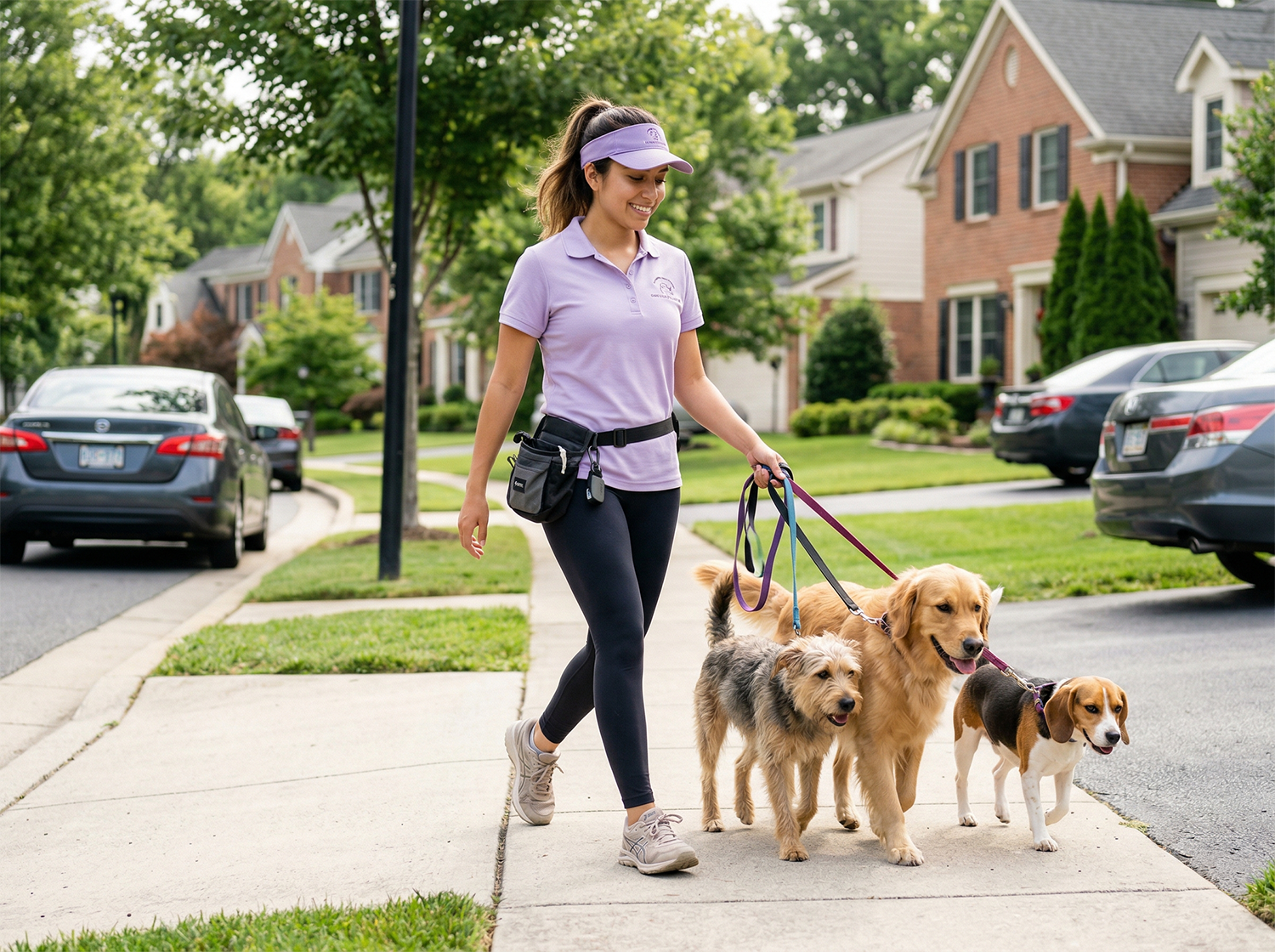
Why Dog Walking Works as a Business
Americans own somewhere north of 90 million dogs. A large share of those dogs live with busy owners who work long hours, travel regularly, or simply don't have the time to give their dog the exercise it needs every day. Demand is strongest in denser urban and suburban areas, particularly in neighborhoods with higher incomes and more full-time working households, but it exists in most residential markets to some degree.
What makes dog walking particularly good as a starting point is how low the barrier to entry is. No formal qualification is required to get started, though the ability to handle dogs confidently is something you develop over time and shouldn't be underestimated. No expensive equipment. A leash, some poop bags, a reliable schedule, and a genuine comfort with dogs is most of what you need to take your first clients.
The recurring nature of the work is the business model's real strength. A dog that needs walking Monday through Friday doesn't stop needing it next week. A client who trusts you with their dog and knows you'll show up on time has a good reason to keep coming back. Daily and weekly walkers build some of the most stable recurring income in the service business world because the need is consistent.
It's also genuinely enjoyable work if you love dogs. That matters more than people sometimes acknowledge when thinking about building a business. Work you find meaningful and look forward to is far easier to sustain than work you treat as a transaction.
Is This the Right Business for You?
Dog walking suits people who genuinely enjoy being around dogs, are comfortable outdoors in all kinds of weather, and have the reliability and communication skills to build trust with clients who care deeply about their animals.
The work is physically active. You'll be walking miles each day, often with multiple dogs, in heat, cold, and rain. If you find that energizing rather than exhausting, that's a good sign.
Handling dogs requires more than just liking them. Dogs have different temperaments, different energy levels, and different behaviors on a leash. Being confident, calm, and capable with a range of dogs is something that develops with experience, but you need a genuine baseline comfort with animals before you start walking dogs for paying clients.
The business side is straightforward but real. Scheduling, client communication, route planning, and record keeping are all part of running this properly. The easy accessibility of dog walking as a starting point doesn't mean the business side looks after itself. It still needs attention.
If you love dogs, you're reliable, and you're genuinely interested in building something that belongs to you, this is one of the best low-barrier businesses you can start.
This One Actually Requires Loving Dogs
Most service businesses don't require passion for the work itself. Window cleaning, pressure washing, lawn care. You can do those well without particularly caring about windows, driveways, or grass. Dog walking is different.
You're caring for someone's family member. Clients are trusting you with an animal they love, and they can tell very quickly whether you actually enjoy being around their dog or whether you're just doing a job. The operators who build loyal, long-term client bases in this category are genuinely dog people. They know how to read a dog's mood, they remember individual dogs' names and quirks, and they communicate about the dogs in a way that gives clients confidence.
If dogs are a means to an end rather than something you genuinely enjoy, there are better service businesses to start. If you love them, this is one of the best.
Research and Plan Before You Start
Dog walking has a lower planning threshold than most service businesses, but a one-page summary before you take your first client is still worth the time.
Where will you operate? Define your service area. A tight geographic zone keeps your travel time between walks low and your schedule efficient. Dense residential neighborhoods with high dog ownership are your starting market. Apartment buildings and townhouse complexes are worth noting as they often have high dog density in a small area.
How many dogs will you walk at once? Solo walks command a higher per-walk rate and are lower risk. Group walks allow you to earn more per hour but require confident dog handling and an understanding of how to manage multiple dogs safely. Most new walkers start solo and move to small groups as their confidence and client base grows.
What services will you offer beyond walking? Drop-in visits, pet sitting, and overnight stays are natural adjacent services that expand your revenue from the same client base. Understanding what you want to offer from the start shapes how you price and present your business.
What does the local market look like? Search for dog walkers in your area. Apps like Rover and Wag dominate the platform side of the market. Understanding what independent walkers in your area charge, and how they differentiate from platform-based walkers, helps you understand where you fit and what your pricing should reflect.
Startup Costs: What to Expect
Dog walking has one of the lowest startup costs of any service business. Here's a realistic breakdown:
- Business registration (LLC or DBA filing) — $50 to $200 depending on your state
- EIN from the IRS — Free
- General liability insurance — $300 to $700 per year
- Pet sitter and dog walker insurance (specialist policy) — $200 to $500 per year. Standard general liability may not fully cover incidents involving animals in your care. A specialist policy is worth having.
- Leashes (multiple, different lengths) — $30 to $80
- Waste bags and dispenser — $20 to $50
- Treat pouch and training treats — $20 to $40
- First aid kit (pet-specific) — $30 to $60
- Branded clothing — $50 to $100
- Flyers and door hangers — $75 to $150
- Domain name (.com) — $15 to $20 per year
- Platform or payment system — $18 to $39 per month
- Logo and basic branding — $0 if you use AI tools, $150 to $400 if you use a designer
A realistic all-in starting figure is $800 to $1,800. One of the most accessible starting costs in any service category. The specialist pet insurance is the one line item worth not skipping even at the low end of the budget. It covers you for incidents involving animals in your care that standard policies often exclude.
Licensing, Insurance, and Business Basics
We're not lawyers or insurance brokers. Get specific advice for your situation. Dog walking is one of the less regulated service businesses, but the business basics still matter and some specifics are worth getting right early.
Licensing. Dog walking is not a licensed trade in most US states. You can legally start without a formal qualification. That said, some cities and counties require a business license for any commercial service operation, and some require a specific pet business permit. Check with your local city or county business licensing office before you start operating commercially. It's a quick check that removes a potential issue.
Specialist pet insurance. This is the most important insurance call for a dog walker. Standard general liability policies often exclude or limit coverage for animals in your direct care. A specialist pet sitter and dog walker insurance policy covers you for incidents involving the dogs while they're with you: bites to third parties, injury to the dog in your care, or damage caused by a dog you're walking. The cost is modest, typically $200 to $500 per year for a solo walker, and the coverage gap it fills is real.
Business structure. Many dog walkers start as a sole proprietor and formalize later. An LLC is worth considering as the business grows. A brief conversation with a free SCORE mentor is the right first step rather than just defaulting to whatever is simplest.
Client contracts. A simple service agreement that covers what services you provide, your cancellation policy, emergency veterinary authorization, and what happens if a dog behaves aggressively is worth having before your first client. Templates are available online and can be adapted to your specific services. This protects both you and the client and signals professionalism.
Background check. Worth running on yourself. Clients are handing you a key to their home and trusting you with their dog. A background check is a straightforward trust signal that removes a common hesitation for new clients.
Define Your Services and Pricing
Dog walking services price by duration and format. The goal is a clear menu that clients can choose from and sign up for without back and forth.
Walking services:
- 30-Minute Dog Walk. Your most common service. Solo walk, one dog, 30 minutes. Daily. A natural fit for clients who need midday walks for a working dog while they're at the office. Fixed price per walk.
- 60-Minute Dog Walk. Solo walk, one dog, 60 minutes. Daily. For higher-energy breeds, larger dogs, or clients who want a longer outing. Fixed price per walk.
- Group Dog Walking. Multiple dogs walked together. Variable pricing by duration: 30-minute walk, 45-minute walk, 60-minute walk. A more efficient way to earn per hour once your client base is dense enough to route walks efficiently. Not recommended until you're confident handling multiple dogs simultaneously.
Drop-in and pet sitting services:
- Drop-In Pet Visit. A visit to the client's home without a full walk. Feed, refresh water, playtime, and a check-in. Variable by duration: 15-minute visit, 30-minute visit, 60-minute visit. Popular for cats, puppies, and senior dogs who need checking on rather than a long walk.
- Pet Sitting. Extended in-home care when the client is away. Variable: 30-minute visit, 60-minute visit, or overnight stay. A natural expansion of your service offering for existing dog walking clients who travel.
- Overnight Pet Sitting. Staying at the client's home overnight while they're away. Fixed price per night. Your highest-value single service and a natural extension of an established trust relationship.
On pricing: look at what dog walkers in your area charge for comparable services, both on platforms and independently. Independent walkers who operate professionally can typically charge more than platform rates because the relationship is direct and the experience is more personalized. In many US markets, 30-minute solo walks range from $18 to $30, though rates in major cities like New York or San Francisco can run considerably higher. Price in the middle to upper range of your local market, not at the bottom.
A note on transport: in dense urban areas, walking between clients on foot is standard. In more spread-out suburban markets, a car is often needed to cover the route efficiently. Factor travel time into how you schedule and price, particularly if clients aren't within easy walking distance of each other.
Daily and weekly recurring clients are your most valuable. A client who signs up for five walks a week gives you predictable weekly income from a single relationship. Price your recurring rates slightly below your one-off rate to reward the commitment.
This is what ServiceSubscriber does.
A page, payments, and delivery tracking. Live in 20 minutes.
14-day free trial. No credit card.

Your Brand
Dog walking is a trust-based business. Clients are handing you access to their home and responsibility for an animal they love. A professional, warm brand signals that this is a real business run by someone who takes it seriously, before you've had the chance to demonstrate it in person.
Before you settle on a name, run the standard checks:
State business name register. Your state's Secretary of State website. If it's taken, move on.
Federal trade marks. A quick check at USPTO.gov before you invest in printed materials and clothing.
Domain availability. A .com. Check it before you commit to the name.
Social handles. Instagram and Facebook at the same time. Dog walking content performs well visually. Happy dogs, neighborhood walks, and client photos with permission build an appealing presence over time. When the name, domain, and handles all align, register everything and move on.
On logos:
Create a professional logo for [Business Name], a dog walking and pet care business. Warm, approachable, and trustworthy. Use [color preference]. It needs to work on a t-shirt, a door hanger, and a website. Provide 3 or 4 variations.
Getting Your First Clients
Dog walking clients come from personal networks and local community channels more than most other service businesses. The trust required to hand someone your house key and your dog means word of mouth and neighbor recommendations carry particular weight.
Start with people you know. Friends, family, neighbors with dogs. Offer to walk a few dogs for free or at a reduced rate in exchange for an honest review and a photo. A handful of genuine reviews from real clients in your area is your most valuable early asset.
Nextdoor. Dog owners are active on Nextdoor and frequently ask for walker recommendations. Introduce yourself, explain what you offer and what you charge, and ask your first satisfied clients to post a recommendation. A few genuine neighbor endorsements in the same zip code go a long way.
Local Facebook groups and pet owner groups. Most neighborhoods have active groups. Many also have dedicated local pet owner communities. Introduce yourself, be helpful when people ask questions about dogs, and show up consistently.
Rover and Wag as a starting point. Creating a profile on one of the major platforms is a legitimate way to get your first few clients and build reviews before you have an established reputation. Use the platform to get started, then build your direct client relationships alongside it.
Vet clinics and pet supply stores. Ask if you can leave cards or a small flyer. Vets in particular get asked for recommendations for dog walkers and pet sitters regularly. Being the name they mention is worth the effort of making contact.
Door hangers in target neighborhoods. A simple flyer on door handles in streets with high dog ownership. What you offer, what you charge, a QR code to your page. Drop 200 in your target area on a weekend morning.
Google Business Profile. Free at business.google.com. Fill it out completely. Ask your first clients for a review. A verified listing with reviews puts you in front of people searching for dog walkers in your area.
Ask for referrals. After a client is happy with your work, ask directly. Dog owners talk to other dog owners. Most will refer you if asked.
Give Clients a Way to Sign Up
When someone finds you through Nextdoor or a referral, they should land somewhere that shows what you offer, what you charge, and lets them sign up or get in touch without friction. The easier you make the first step, the more likely a curious person becomes a recurring client.
A service page with your walks and visits listed clearly, pricing visible, and a way to sign up for a recurring schedule or purchase a first walk handles the conversion without requiring you to be available to respond to every inquiry manually.
Services and pricing upfront. Clients choose their service and sign up directly. Payment handled at checkout. For non-standard arrangements, a private subscription invite with a custom price keeps things clean without cluttering your public page.
Make the First Walk Count
The first walk is where a new client decides whether to put you on a regular schedule. Getting this right is the difference between a one-off and a long-term relationship.
Do a meet and greet first. Before walking a new dog, a brief in-person introduction where you meet the dog in the client's home is standard practice and something most clients will expect. It lets the dog get comfortable with you before you're solely responsible for it, and it gives you a chance to ask about the dog's behavior, any commands it knows, and anything the client wants you to know.
Communicate after every walk. A brief message when you return the dog, including how the walk went and anything notable, builds confidence with clients who aren't there to see it themselves. Some walkers send a photo from the walk. Clients love this and it's one of the simplest things you can do to differentiate your service from a generic platform experience.
Be on time. A dog whose walk window is 12pm to 1pm will be waiting at the door. Show up when you said you would. Reliability is the single most important thing in this business.
Arrive and leave the home exactly as you found it. Locks locked, gates latched, the dog settled. No exceptions.
Ask about a regular schedule. After the first walk, mention that you have a regular schedule available. Something like: "Happy to put you on a regular slot if this worked well. Makes it easier for both of us." Not a hard sell. Just a natural offer.
Getting Paid Consistently
The billing challenge in dog walking is that individual walks are small in value, which makes invoicing after every walk impractical and chasing payment frustrating. Automatic recurring billing solves this cleanly.
A client who signs up for five walks a week pays automatically on the billing date. You show up, walk the dog, mark it done. No invoice at the end of the week. No wondering whether they'll pay before the next walk. The payment processes and the schedule continues.
For daily walkers this is particularly important. Daily service means daily value, but you don't want to be sending daily invoices or chasing weekly payments from every client. Setting up recurring billing from the start keeps the administrative overhead minimal and the income predictable.
Build the client base with recurring scheduled payments as the default. One-off walks are available for clients who only need occasional coverage, but position the recurring schedule as the primary offer. Most clients who need regular midday walks are happy to commit to a schedule rather than arrange each walk individually.
Putting It Together
Dog walking is one of the most accessible service businesses you can start. The startup cost is minimal. No formal qualification is required to begin, though confident dog handling takes time to develop. The demand is genuine and recurring. And the work is enjoyable if you actually love dogs, which matters more than it's given credit for.
The business side still requires real attention. Insurance, a service agreement, reliable scheduling, clear communication with clients. Being easy to start doesn't mean it looks after itself. The operators who build the most durable client bases in this category are the ones who treat it like a business from day one, even when they're starting with two clients and a leash.
Get your insurance sorted before your first client. Get your page live before you ask anyone for a referral. Do the meet and greet. Communicate after every walk. Show up when you said you would.
That's the starting point. The rest builds from being the person dog owners can rely on.
Ready to start your dog walking business?
Create your service page, share the link, and start building your client base. Clients sign up for the walks they need, payment processes automatically, and you show up on schedule.
14-day free trial. No credit card. 50% off first 3 months.
Did you find this guide helpful?
More guides
Explore other service businesses you can start
How to Start a Service Business
The complete starting point for any service business.
Read guide
How to Start a Dog Grooming Business
Same client base, natural add-on service for dog owners.
Read guide
How to Start a Pet Waste Removal Business
The simplest recurring service for dog owners.
Read guide