
How to Start an Appliance Cleaning Business
Appliance cleaning is one of the more accessible indoor service businesses you can start. No specialist license required for residential work, modest startup cost, and demand exists in most homes. The oven that hasn't been properly cleaned in two years. The fridge that smells like something that should have been thrown out months ago. The washing machine drum that's growing mold in the gasket. Most homeowners know it needs doing. Most would rather pay someone else to do it.
31+ people found this guide helpful

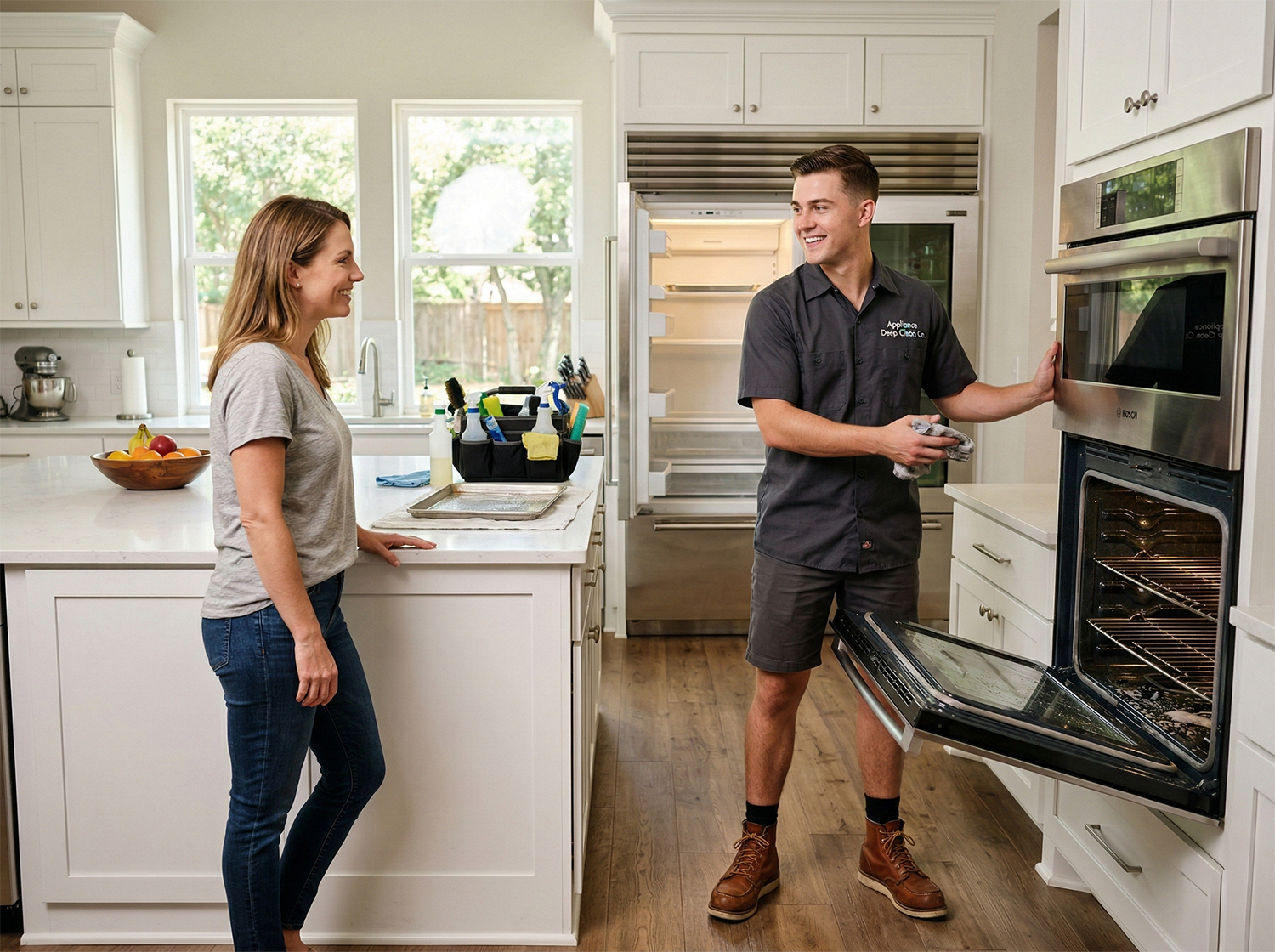
Why Appliance Cleaning Works as a Business
Appliances are among the most neglected surfaces in any home. Ovens accumulate baked-on grease across dozens of meals. Fridges harbor spills in the back corners of every shelf. Washing machine gaskets collect moisture and develop mold that most homeowners don't discover until the smell becomes obvious. Dishwashers, dryers, range hoods, microwaves. All of it builds up quietly and steadily, and most people put off dealing with it indefinitely.
The recurring structure builds over time rather than arriving immediately. A thoroughly cleaned oven needs attention again in six months for a household that cooks regularly. A washing machine needs a deep clean quarterly. A fridge typically warrants a proper clean twice a year. These intervals are real, but like carpet cleaning, the recurring side tends to be reminder-driven rather than automatic. The client who experienced a good result and has a clear reason to schedule again is your recurring base. Building that takes consistent follow-up and a good first impression.
The commercial opportunity is significant and tends to be higher frequency. Restaurants, cafes, food trucks, and commercial kitchens need their ovens, fryers, range hoods, and refrigeration cleaned monthly or more often, both for performance and in many cases for health code compliance. These are recurring, predictable contracts once established and worth building toward alongside the residential base.
The work also pairs naturally with house cleaning. Residential house cleaners regularly get asked whether they clean ovens and fridges. Appliance cleaning specialists who develop referral relationships with cleaning businesses often find this to be one of their most efficient acquisition channels.
Is This the Right Business for You?
Appliance cleaning is hands-on, detailed, indoor work. You'll be on your knees scrubbing oven interiors, removing and soaking racks, reaching into the back of refrigerators, cleaning out washing machine gasket folds. It's not glamorous work but it's satisfying when done properly, and the before-and-after contrast is significant enough that clients notice and comment on it.
Attention to detail is the primary skill. The difference between a good result and a mediocre one is whether you got the baked-on grease off the back wall of the oven, whether the gasket fold on the washing machine is actually clean, whether the fridge shelves went back in the right order. Clients see these things. The operators who build strong referral businesses in this category are the ones who consistently leave appliances looking genuinely clean rather than cleaned-around.
The chemical side requires some learning. Oven cleaners, degreasers, descalers, and sanitizers each have appropriate applications and some have important safety considerations around ventilation and skin contact. Understanding what you're using and why before you start working in clients' kitchens matters both for quality and for your own safety.
If you're thorough, take pride in a clean result, and are willing to learn the product and technique side properly, this is a genuinely good starting point for an indoor service business.
Chemical Safety and Client Considerations
Appliance cleaning involves working with degreasers, oven cleaners, descalers, and sanitizers that require care in application. This is worth understanding before you start working in paying clients' kitchens.
Oven cleaners. Many professional oven cleaning products contain sodium hydroxide (caustic soda) or other strong alkaline agents. These are highly effective on baked-on grease but require gloves, eye protection, and good ventilation. Never apply strong alkaline cleaners to self-cleaning oven interiors, fan blade components that aren't rated for chemical exposure, or aluminum surfaces unless the product is specifically rated for them. Read the product instructions before the job, not during it.
Ventilation. Strong cleaning chemicals produce fumes in enclosed spaces. Always ensure kitchen windows are open and the space is ventilated during oven cleaning. Some products require the room to be vacated for a period during dwell time. Communicate this to clients before you start, not when you're halfway through the job.
Client sensitivities. Ask at intake whether anyone in the household has chemical sensitivities, respiratory conditions, or allergies. Some clients may prefer eco-friendly or fragrance-free products. Having lower-chemical options available is worth the small additional cost. A client who wasn't warned about fumes and reacts badly is a complaint. A client who was asked upfront and accommodated is a long-term client.
Food safety. You're cleaning surfaces that food is prepared on and stored in. Thorough rinsing of all food-contact surfaces after chemical application is non-negotiable. Any chemical residue left in a fridge, oven, or dishwasher has the potential to contaminate food. Use food-safe products wherever food contact surfaces are involved and rinse thoroughly every time.
Electrical safety. Ovens should be cool and powered off before cleaning. Fridges should be emptied of perishables and, where access to the coils or drainage tray is needed, powered down. Never apply liquid cleaning products directly to electrical components. These are straightforward precautions that prevent accidents.
Research and Plan Before You Start
A one-page plan before you spend anything on products and equipment is worth the time.
Who are you targeting first? Residential homeowners are the most accessible starting market. Renters and homeowners pre-moving are a strong reactive segment: end-of-tenancy oven and fridge cleans are a consistent, predictable need. Families who cook regularly and haven't had appliances professionally cleaned are your maintenance client base. Property managers represent a commercial-adjacent opportunity since rental turnovers require clean appliances.
Will you pursue commercial from the start? Commercial kitchen cleaning is a distinct service category with higher-value contracts but different considerations around food hygiene regulations, after-hours scheduling, and chemical compliance. Many operators start residential and build toward commercial once they have the product knowledge and a few references. That's a sensible path.
What services will you lead with? Oven cleaning is the natural lead service. It has the highest visible impact per job, clients understand the need, and the transformation is dramatic. Fridge cleaning and washing machine cleaning are natural additions. The whole-home appliance care package is the anchor recurring offer once you have the breadth to deliver it.
What does the local market look like? Search for appliance cleaning services in your area. The category is growing and in many residential markets remains underserved relative to demand, though competition is increasing in some areas. Where operators do exist, look at how they position and what they charge. The most common gap is availability and reliability, not price.
Startup Costs: What to Expect
Appliance cleaning has one of the more accessible startup cost profiles of the indoor service businesses in this guide series. Here's a realistic breakdown:
- Business registration (LLC or DBA filing) — $50 to $200 depending on your state
- EIN from the IRS — Free
- General liability insurance — $500 to $1,000 per year
- Professional oven cleaning solution (alkaline and citrus-based) — $80 to $200
- Degreaser (kitchen surfaces and range hoods) — $40 to $100
- Descaler (washing machines, dishwashers, coffee machines) — $30 to $80
- Fridge and food-safe sanitizer — $30 to $80
- Brushes, scrapers, and scouring pads (multi-grade) — $40 to $100
- Microfiber cloths (large supply) — $30 to $75
- Heavy-duty gloves and eye protection — $20 to $50
- Knee pads and apron — $30 to $60
- Caddy or carry case for products — $30 to $75
- Branded clothing — $75 to $150
- Flyers and door hangers — $100 to $200
- Domain name (.com) — $15 to $20 per year
- Platform or payment system — $18 to $39 per month
- Logo and basic branding — $0 if you use AI tools, $150 to $400 if you use a designer
A realistic all-in starting figure is $800 to $1,800. One of the most accessible starting costs for an indoor service business. Everything fits in a standard vehicle. Start with the residential menu and invest in commercial-grade products and equipment as the commercial side develops.
Your Brand
Appliance cleaning clients are inviting you into their kitchen to handle things they'd rather not deal with themselves. A professional, clean brand signals that you take the work seriously. It also helps overcome the hesitation some clients have about letting someone into their home to work inside their appliances.
Before you settle on a name, run the standard checks:
State business name register. Your state's Secretary of State website. If it's taken, move on.
Federal trade marks. A quick check at USPTO.gov before you invest in printed materials and clothing.
Domain availability. A .com. Check it before you commit to the name.
Social handles. Facebook and Instagram. Before-and-after appliance photos perform well on both. A genuinely clean oven alongside what it looked like before is the kind of image that gets shared. When the name, domain, and handles all align, register everything and move on.
On logos:
Create a professional logo for [Business Name], a residential and commercial appliance cleaning business. Clean, approachable, and trustworthy. Use [color preference]. It needs to work on a work shirt, a door hanger, and a website. Provide 3 or 4 variations.
Insurance and Business Setup
We're not lawyers or insurance brokers. Get specific advice for your situation.
General liability insurance. You're working inside clients' appliances with cleaning chemicals. A chemical reaction that damages an oven interior, a fridge shelf broken during cleaning, an appliance that doesn't work correctly after a visit. General liability insurance covers you when things go wrong. Get it before your first job. Plan for $500 to $1,000 per year for a solo operator.
Commercial kitchen compliance. Commercial food service operators work under health department regulations that frequently include requirements around the cleanliness of cooking equipment, range hoods, grease traps, and refrigeration. These regulations vary by state and municipality but are often more specific and more strictly enforced than most new operators expect. Before you offer commercial kitchen cleaning services, check what's required or recommended in your specific market. Range hood and grease duct cleaning in particular can be subject to local fire code requirements and may require documentation or compliance certification in some jurisdictions. Some operators pursue a food handler's certification or ServSafe credential when moving into commercial kitchen work. It's not universally required for cleaning contractors specifically, but it demonstrates food safety awareness and is a reasonable credential to hold when working in regulated food preparation environments.
Licensing note. No specialist license is required for residential appliance cleaning in most US states. Commercial kitchen cleaning sits in a different position, particularly where health code compliance or grease management documentation is involved. Check what applies in your market before you actively pursue commercial kitchen contracts.
Business structure. Talk to a free SCORE mentor or your local SBDC about sole proprietor versus LLC before you start. A brief conversation is worth having before your first job.
Define Your Services and Pricing
Appliance cleaning services are among the most naturally productized in any indoor service category. Each appliance is a discrete, fixed-scope job. Pricing is clear. Clients self-select easily. The bundle packages are where the real recurring value is built.
Residential individual appliance services:
- Oven Clean and Care. Your lead service. Interior, door glass, racks, and trays. Twice a year for households that cook regularly. Variable pricing: single oven, double oven, oven plus range hood filters. Oven must be cool before arrival. The most requested standalone appliance service and the one that generates the most before-and-after impact.
- Range Hood Filter Clean and Care. Filters degreased and cleaned, exterior wipe-down included. Twice a year. Fixed price. A natural add-on to any oven clean visit and a quick, high-value standalone for clients who maintain their own ovens but neglect the hood.
- Fridge and Freezer Clean and Care. Shelves and drawers removed and cleaned separately, interior wiped with food-safe solution, seals cleaned, drip tray cleared. Variable: fridge only, fridge plus freezer (combined), fridge plus separate deep freezer. Twice a year. Clients should reduce fridge contents before arrival.
- Washing Machine Clean and Care. Gasket folds, detergent drawer and housing, filter access where accessible, drum clean cycle. Quarterly. Fixed price. One of the most neglected appliances in most homes and one of the most satisfying to clean. Set honest expectations on permanent rubber discoloration from mold — cleaning addresses it but may not fully reverse it.
- Dryer Clean and Care. Lint filter housing, accessible lint pathways, exterior wipe-down. Twice a year. Fixed price. Important to note clearly that full vent duct clearing is a separate service requiring different equipment.
- Dishwasher Clean and Care. Filter, spray arms where removable, seals, racks, and interior cleaned and deodorized. Twice a year. Fixed price. Appliance must be empty before service.
- Microwave Clean and Care. Interior and exterior cleaned and deodorized, turntable washed. Twice a year. Fixed price. Quick standalone or natural add-on to any kitchen visit.
- BBQ Clean and Care. Grates, plates, flame tamers, drip tray, and exterior. Twice a year, typically pre-season. Variable: small (2-3 burner), medium (4-5 burner), large (6+ burner or BBQ plus hotplate). Gas lines and internal disassembly are not included.
Residential bundle packages:
- Kitchen Appliance Care. Oven, range hood filters, fridge and freezer, dishwasher in a single visit. Microwave can be added. 3 to 4 hours. Twice a year. Your primary recurring package for kitchen-focused clients. Fixed price.
- Laundry Appliance Care. Washing machine and dryer in a single visit. 1.5 to 2 hours. Twice a year. Fixed price. A natural standalone for clients who manage their kitchen appliances themselves.
- Whole Home Appliance Care. All major kitchen and laundry appliances in a single visit: fridge and freezer, oven, range hood filters, dishwasher, washing machine, and dryer. 4 to 5 hours. Twice a year. Your highest-value residential recurring service. The client who signs up for a twice-yearly whole-home appliance care visit is your most valuable residential relationship.
Commercial services:
- Commercial Oven Cleaning. Monthly. Variable by quantity: 1 oven, 2-3 ovens, 4+ ovens. Includes racks and interior degreasing. Scheduled outside business hours.
- Commercial Range Hood and Exhaust. Monthly. Fixed price. Full degrease of filters, hood, and accessible ductwork. Note that full grease duct cleaning to the roof connection is a specialist service requiring separate equipment and certification in many jurisdictions.
- Commercial Fryer Cleaning. Monthly. Variable: 1 fryer, 2-3 fryers, 4+ fryers. Full degrease and boil-out. Oil disposal is not included and should be arranged separately by the client.
- Commercial Grill and Griddle Cleaning. Monthly. Variable: 1 unit, 2-3 units, 4+ units. Surface restored and degreased, grease traps cleaned.
- Commercial Fridge and Freezer Cleaning. Monthly. Variable: 1 unit, 2-3 units, 4+ units. Interior sanitized, coils and seals cleaned. Schedule during low-stock period.
- Walk-In Cooler and Freezer Cleaning. Monthly. Variable: cooler only, freezer only, cooler plus freezer. Walls, floors, shelving, and coils cleaned. Schedule during low-stock period.
- Commercial Dishwasher Cleaning. Monthly. Fixed price. Wash arms, filters, and tanks descaled. Improves wash quality and extends equipment life.
- Commercial Coffee Machine Cleaning. Monthly. Variable: 1 machine, 2 machines, 3+ machines. Full descale, group head clean, and grinder purge. A high-touch commercial service for cafes and offices.
- Ice Machine Cleaning. Monthly. Fixed price. Full sanitization and descale. Prevents mold and bacteria buildup. A health-compliance-adjacent service that commercial clients take seriously.
- Office Kitchen Appliance Clean. Monthly. Variable: small office (up to 3 appliances), medium office (4-6 appliances), large office (7+ appliances). Fridge, microwave, dishwasher, and coffee machine. Scheduled outside business hours.
- Restaurant Kitchen Package. Monthly. Fixed price. Ovens, range hood, fryers, grills, and dishwasher. Scheduled outside service hours. A high-value monthly relationship for operators ready to serve the commercial kitchen segment.
- Cafe Appliance Package. Monthly. Fixed price. Coffee machine, fridge, display units, and dishwasher. Early morning or after close.
- Food Truck Deep Clean. Monthly. Fixed price. All cooking equipment, fridge, and surfaces. Full degrease and sanitize.
On pricing: understand your real cost per job including chemicals, time, and travel. Residential individual appliance services run $60 to $150 per appliance depending on size and condition in most US markets. Bundle packages command a natural discount over individual services and are priced to make the package the obvious value choice. Commercial services are priced higher to reflect the volume, frequency, and after-hours scheduling they require. For commercial clients, non-standard arrangements, or large-scale kitchens, a private subscription invite with a custom price keeps the arrangement clean.
This is what ServiceSubscriber does.
A page, payments, and delivery tracking. Live in 20 minutes.
14-day free trial. No credit card.

Getting Your First Clients
Appliance cleaning clients often come through awareness rather than active searching. Most homeowners don't look for an appliance cleaner the way they search for a plumber after something breaks. The approach is creating awareness of the service at the right moments.
Door hangers and flyers in target neighborhoods. A before-and-after image of a cleaned oven on a door hanger is genuinely compelling. Before the holidays and before spring are the two strongest windows. Families cooking for gatherings realize they need the oven done. Spring cleaners are thinking about the appliances they've been ignoring. A door hanger in the right streets at the right time generates consistent inquiries.
Nextdoor. Post before-and-after photos with permission. Ask satisfied clients to post a recommendation. Appliance cleaning referrals spread quickly in neighborhood communities because the need is universal and the result is easy to describe.
House cleaners and cleaning businesses. Professional house cleaners regularly get asked about oven and fridge cleaning. Developing referral relationships with cleaning businesses in your area, where they refer clients to you and you refer clients back where appropriate, is one of the most efficient acquisition channels in this category. Approach local cleaning businesses professionally and explain what you offer.
Real estate agents and property managers. End-of-tenancy appliance cleaning is a consistent, recurring need. Rental properties need ovens and fridges cleaned between tenants. A professional introduction with clear pricing and reliable availability is how these relationships start. Real estate agents prepping homes for sale also need appliances looking their best.
Restaurants and cafes. Walk-in introductions to local food businesses with a clear explanation of what you clean, what it costs, and when you're available. Food business owners understand the need. The conversation is often short. Proof of insurance and a professional presentation are what close these relationships.
Facebook groups and local community pages. Before-and-after photos of oven cleans in particular generate genuine engagement. Post when people ask for recommendations. Show up consistently.
Google Business Profile. Free at business.google.com. Fill it out completely and ask your first clients for a review. People searching for oven cleaning or appliance cleaning near them are ready to purchase.
Give Customers a Way to Sign Up
When someone finds you through a referral or scans your door hanger QR code, they should land somewhere that shows your services clearly, with pricing visible, and lets them sign up or request a visit without calling you.
Individual appliance services and bundle packages both lend themselves to a fixed-price page where clients choose what they need and sign up directly. For commercial clients or large-scope jobs that need an assessment, a private subscription invite with a custom price keeps the arrangement clean.
Here's an example of what that looks like in practice:
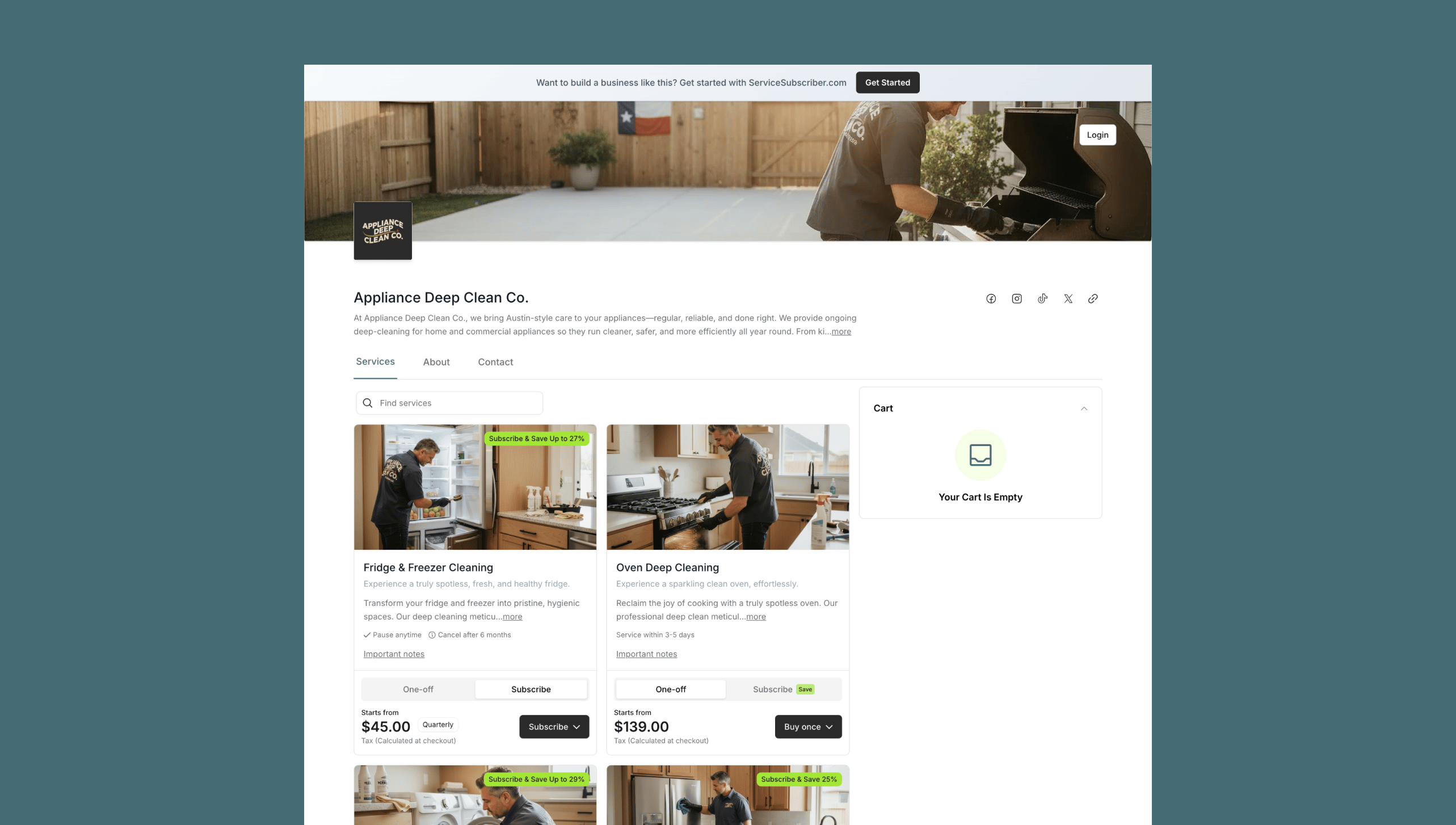
Services and pricing upfront. Clients choose their service or package, sign up, and pay at checkout. You get notified, confirm the appointment, and show up ready to work.
Make the First Job Count
The before-and-after in appliance cleaning is immediate and dramatic. An oven that was caked in baked-on grease and came out looking close to new is something clients photograph and show people. That word of mouth is your most valuable marketing.
Set expectations upfront. Some staining on rubber gaskets is permanent even after thorough cleaning. Some deep scoring on oven enamel doesn't clean away. Some discoloration on appliance interiors is from heat rather than dirt. Point these things out before you start, not after. A client who was warned about a permanent stain is understanding. One who expected it to disappear is not.
Communicate about chemicals and ventilation. Let the client know when fumes will be present and what windows to open. Tell them when the oven needs to air out before use. Confirm the fridge is safe to reload after cleaning. These are quick, professional communications that prevent the most common complaints in this category.
Leave every surface properly clean. The interior of the fridge wiped clean and free of chemical residue. The oven interior clean with no cleaner residue on the element or fan. The washing machine gasket fold actually clean, not cleaned around. Clients check. The ones who notice you did the parts most people skip are the ones who call back and refer others.
Mention the recurring schedule. Before you leave, explain the recommended cleaning interval for what you just cleaned and ask if they'd like to be put on a schedule. Most clients who've just seen the result are receptive at that moment. The twice-yearly whole-home appliance care package is a natural offer for any client who just had multiple appliances cleaned.
Getting Paid Consistently
Appliance cleaning sits in a twice-yearly or quarterly billing cycle for most residential services. The gap between visits is long enough that proactive outreach before each service period is worth building into your process, particularly for clients who aren't on automatic billing.
A client on a twice-yearly whole-home appliance care package with automatic billing pays before each visit, you confirm the appointment, show up, do the job. The per-visit value is high enough, typically $200 to $400+ for a full package, that the twice-yearly cadence generates meaningful annual revenue per client.
Commercial clients on monthly service agreements are the most valuable recurring relationships in this category. A restaurant kitchen package that runs monthly is $600 to $1,200 or more per year from a single commercial relationship. Once established, these accounts tend to be stable and require minimal ongoing selling.
Build recurring scheduled payments as the default from your first client. One-off jobs are a natural first visit for new clients, but always offer the recurring schedule before you leave. Clients who have just experienced a genuinely clean appliance understand the value of keeping it that way.
Putting It Together
Appliance cleaning is a genuinely accessible indoor service business with a rich service menu across both residential and commercial markets. The residential side is your starting point. The oven is your lead service. The whole-home package is your anchor recurring offer. The commercial side is where the highest-value recurring contracts exist once you have the product knowledge, references, and approach to serve it.
Invest in proper cleaning products from the start, particularly for oven and commercial degreasing work. Understand the chemical safety side before you start working in paying clients' kitchens. Sort your insurance before your first job. Get your page live before you drop your first door hanger. Set expectations on stains and permanent marks before you start. Leave every appliance genuinely clean. Ask for the twice-yearly schedule before you leave.
The combination of a large addressable residential market, high per-visit value, a natural bundling structure, and a commercial segment that needs monthly service makes this one of the stronger indoor service businesses in this guide series. The operators who do well here are the ones who take the detail seriously and leave every job looking better than the client expected.
Ready to start your appliance cleaning business?
Create your service page, share the link, and start building your client base. Clients sign up for the services they need, payment processes automatically, and you show up on schedule.
14-day free trial. No credit card. 50% off first 3 months.
Did you find this guide helpful?
More guides
Explore other service businesses you can start

How to Start a Service Business
The complete starting point for any service business.
Read guide
How to Start a Cleaning Business
Same client base and a natural referral partner.
Read guide
How to Start an HVAC Maintenance Business
Similar indoor maintenance model serving the same homeowner.
Read guide