
How to Start a Carpet Cleaning Business
Carpet cleaning sits at an interesting point in the service business landscape. The demand is consistent, the revenue per job is meaningfully higher than many home service categories, and clients who've had a good experience tend to come back. The equipment investment is real and the technical side takes time to learn properly. Get those two things right and there's a genuine business here.
36+ people found this guide helpful

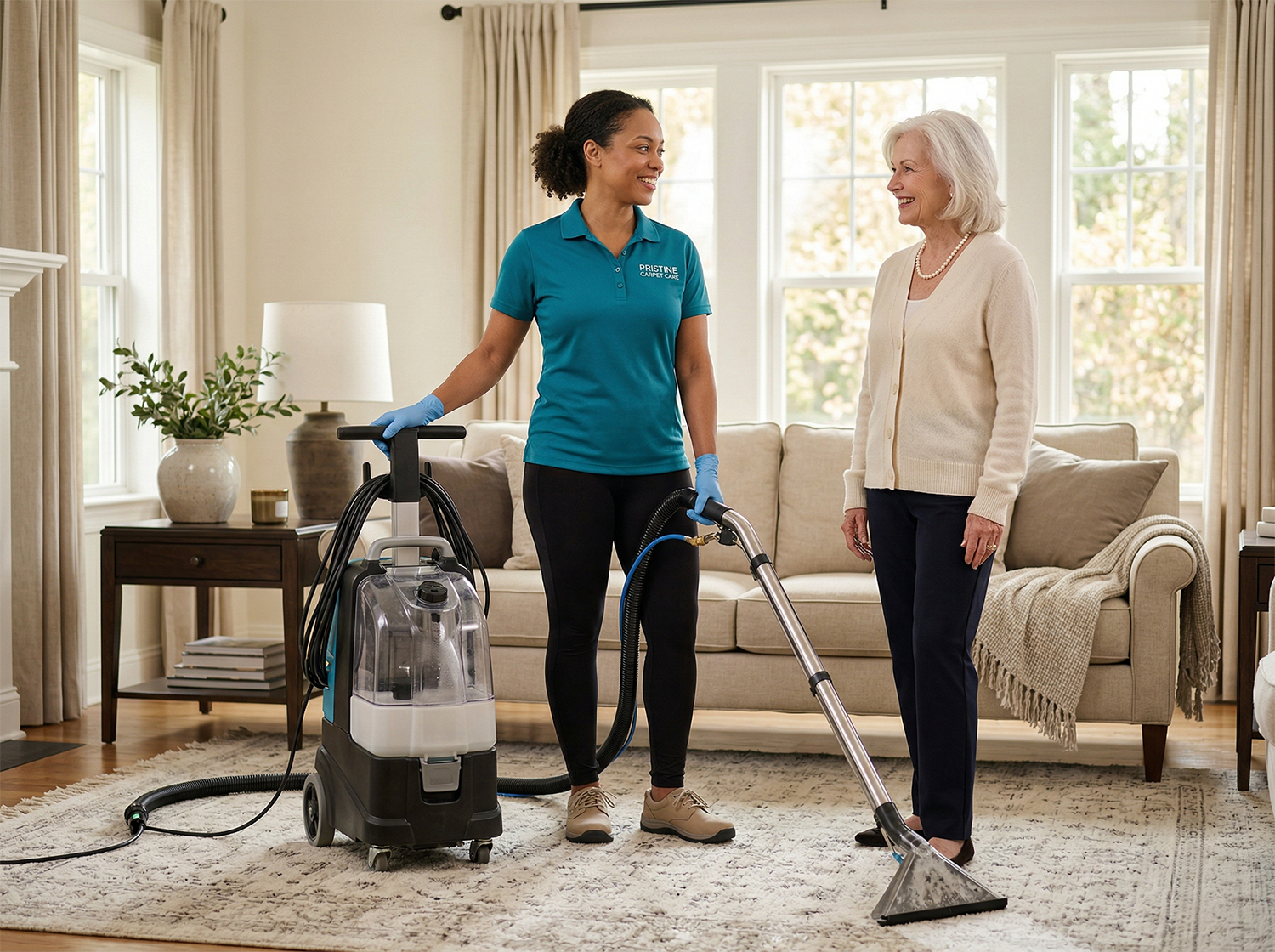
Why Carpet Cleaning Works as a Business
Carpet covers a significant share of residential floor space across the US, particularly in bedrooms, living rooms, and hallways. It traps dust, allergens, pet dander, and general household grime in a way that vacuuming alone doesn't address. Many carpet manufacturers recommend professional cleaning periodically to maintain the material, though suggested intervals vary by carpet type, usage, and warranty terms. In practice, many homeowners fall behind and only call when something visible forces the issue.
That pattern creates two distinct revenue streams. The recurring maintenance client who schedules regular cleaning and stays ahead of buildup. And the reactive client who calls when something has gone wrong: a stain, a pet incident, or a carpet that has been left too long. Both are legitimate business. Operators who build a base of recurring residential clients alongside higher-value reactive work tend to have income that's both predictable and capable of meaningful peaks.
Area rugs are a significant and often overlooked extension of the service. Wool rugs, Persian rugs, synthetic area rugs, and runners all need periodic professional cleaning that household vacuuming doesn't provide. Many rug owners simply don't know the service exists or who to call. Operators who advertise rug cleaning alongside carpet work open up a higher-margin segment of the same client base.
The commercial side adds further depth. Offices, rental properties, hotels, childcare centers, and commercial spaces with carpeted areas need regular professional cleaning, often more frequently than residential. These relationships tend to be consistent once established and represent some of the most predictable revenue in the category.
The per-job revenue is a genuine advantage over many service categories. A professional carpet cleaning job in a standard residential home runs $150 to $400 or more depending on size and services. That's a stronger per-visit rate than many comparable service categories, and it scales naturally with the scope of the job.
Is This the Right Business for You?
Carpet cleaning is physical indoor work. You're operating heavy equipment in clients' homes, moving furniture, working on your knees, and managing chemicals and moisture carefully. The work is demanding and the attention to detail required is genuine. A job done carelessly can leave carpets over-wet, shrunk, or with wicking stains that return within days. That outcome costs you a client and potentially a relationship with everyone they know.
The technical side of this business is real. Different fiber types respond differently to heat, moisture, and chemicals. Wool rugs require a fundamentally different approach than synthetic carpet. Upholstery has its own set of fabric considerations. Understanding these differences before you start working on paying clients' belongings matters. The IICRC (Institute of Inspection, Cleaning and Restoration Certification) offers structured training and certification that is widely recognized in the industry and worth pursuing before you take on paid work.
If you're willing to invest in proper training, take the equipment decision seriously, and approach the technical side with the discipline it requires, there's a genuinely strong business here. The operators who build loyal client bases in this category are the ones who consistently produce a result that's clearly better than what the client expected.
Training and Certification
Carpet cleaning is not a licensed trade in most US states. You can legally start without a formal credential. That said, the IICRC is the industry's primary certification body, and its certifications carry real weight with clients and commercial accounts.
The most relevant certification for a new operator is the CCT, Carpet Cleaning Technician. It covers fiber identification, soil types, cleaning methods, pre-treatment, pH chemistry, and drying. It's not a long course but it covers the foundations properly. The IICRC also offers an upholstery cleaning technician certification and rug cleaning certifications for operators who want to expand into those areas.
Beyond formal certification, hands-on practice before you work on paying clients is important. Practise on your own carpet, on rugs you own, on upholstery you can afford to make a mistake on. The technique for hot water extraction, the feel of a clean that's properly rinsed versus one that's left residue, the difference between a carpet that's drying correctly and one that's at risk of over-wetting: these are things that develop with practice, not just reading.
There are also active Facebook groups and online communities of carpet cleaning professionals who share technique, equipment recommendations, and advice on specific situations. Worth finding and spending time in before you take your first paid job.
Equipment: The Central Decision
The most important decision in starting a carpet cleaning business is the equipment choice. Hot water extraction (HWE), also called steam cleaning, is the dominant method and the standard against which most residential and commercial clients measure professional cleaning. Understanding the equipment options before you spend is worth the time.
Portable electric machines. Self-contained units that plug into a standard outlet and carry their own water supply. Significantly lower cost than truck-mounts, typically $1,500 to $5,000 for a quality commercial portable. The trade-off is lower pressure and heat compared to truck-mounts, and you're managing water refills and waste disposal on-site. A solid starting point for many new operators, particularly those starting with residential work in apartments or multi-story buildings where a truck-mount hose can't reach.
Truck-mount systems. The gold standard for production carpet cleaning. Powered by the vehicle's engine or a dedicated engine in the van, these systems deliver significantly higher heat and suction than portables, which means better cleaning performance, faster drying times, and the ability to handle high-volume commercial work. The entry cost is substantial: a used truck-mount setup runs $5,000 to $20,000+, and a new purpose-built van with a truck-mount system is a significant capital investment. Many operators start with a portable and upgrade to truck-mount once the client base and revenue support it.
Low-moisture encapsulation. A different method that uses a cleaning compound that encapsulates soil as it dries, then is vacuumed away. Lower moisture means faster drying and is popular for commercial maintenance cleaning. Not a replacement for hot water extraction deep cleaning but useful as a maintenance method between full extractions. Worth understanding as part of a broader service toolkit.
The communities on Facebook and industry forums where experienced operators discuss real-world equipment performance are worth spending time in before you make any equipment decision. What holds up after two years of daily use, what the support and parts situation looks like, and what operators who've switched machines regret or don't. This kind of practical knowledge is genuinely useful before a significant purchase.
Research and Plan Before You Start
A one-page execution plan before you spend anything is worth the time.
Who are you targeting first? Residential homeowners are the most accessible starting market. Families with children and pets tend to have the highest carpet cleaning frequency needs. Rental property managers are a strong early commercial relationship: turnover cleans between tenants are a consistent, repeating need. Offices and commercial spaces require more volume and reliability but pay consistently.
What method and equipment will you start with? Your equipment choice shapes your startup cost, your service capability, and who you can realistically serve. A portable machine is accessible and suitable for most residential work. Committing to truck-mount from day one is a larger upfront bet that makes more sense once you have a clearer picture of your local market.
What does the local market look like? Search for carpet cleaners in your area. Understand what they charge, how they position themselves, and where the gaps are. The most common complaints about carpet cleaning services are over-wet carpets that take too long to dry, stains that come back, and operators who don't show up or communicate poorly. Each of those is an opening for someone who does the job properly.
Will you add rug cleaning? Area rug cleaning is a natural extension but requires its own approach. Pickup, cleaning, and redelivery of rugs is how many operators handle it. In-home rug cleaning is possible for some synthetic rugs but wool and delicate rugs are best done in a controlled environment. Understanding this before you start marketing rug cleaning avoids taking on jobs you're not equipped to handle.
Startup Costs: What to Expect
Carpet cleaning has a wider startup cost range than most service businesses in this guide series, driven primarily by the equipment decision. Here's a realistic breakdown for a portable-machine starting setup:
- Business registration (LLC or DBA filing) — $50 to $200 depending on your state
- EIN from the IRS — Free
- General liability insurance — $700 to $1,400 per year
- IICRC CCT certification course and exam — $200 to $400
- Portable hot water extraction machine (commercial grade) — $1,500 to $5,000
- Upholstery tool and attachments — $100 to $300
- Stair tool — $50 to $150
- Pre-spray and pre-treatment chemicals (starter kit) — $200 to $400
- Spot and stain treatment kit — $100 to $250
- Deodorizer and sanitizer — $75 to $150
- Furniture tabs and blocks — $20 to $50
- Commercial wet/dry vacuum (backup) — $100 to $250
- Air movers / fans for drying — $150 to $400
- Branded clothing — $75 to $150
- Vehicle signage — $200 to $600
- Flyers and door hangers — $100 to $200
- Domain name (.com) — $15 to $20 per year
- Platform or payment system — $18 to $39 per month
- Logo and basic branding — $0 if you use AI tools, $150 to $400 if you use a designer
A realistic all-in starting figure for a portable machine setup is $4,000 to $8,500, not including your vehicle. A truck-mount setup adds $5,000 to $20,000+ depending on whether you're buying used or new. Start with a quality portable, build the client base, and let the upgrade path be funded by the business.
Your Brand
Carpet cleaning clients are inviting you into their home with heavy equipment and chemical solutions. A professional brand signals competence before you've arrived. Clean, consistent, and credible across every touchpoint is the standard.
Before you settle on a name, run the standard checks:
State business name register. Your state's Secretary of State website. If it's taken, move on.
Federal trade marks. A quick check at USPTO.gov before you invest in signage and uniforms.
Domain availability. A .com. Check it before you commit to the name.
Social handles. Facebook and Instagram. Before and after carpet photos perform well visually. When the name, domain, and handles all align, register everything and move on.
On logos:
Create a professional logo for [Business Name], a carpet and upholstery cleaning business. Clean, trustworthy, and professional. Use [color preference]. It needs to work on a vehicle door, a work shirt, and a door hanger. Provide 3 or 4 variations.
Insurance and Business Setup
We're not lawyers or insurance brokers. Get specific advice for your situation.
General liability insurance. You're operating heavy wet equipment in clients' homes, applying chemicals to their carpets and upholstery, and occasionally moving their furniture. Over-wetting that damages flooring beneath carpet, a chemical reaction on a delicate rug, furniture damage during a move. General liability insurance covers you when things go wrong at a client's property. This category has a higher potential for property damage than many service businesses. Plan for $700 to $1,400 per year for a solo operator.
Care, custody, and control coverage. Standard general liability policies often exclude damage to property in your care or custody. When you're cleaning a client's wool rug or upholstered sofa, that item is in your care. Check with your broker whether your policy covers damage to client property you're actively working on, and ask specifically about care, custody, and control coverage. This is a gap that catches new operators off guard.
Chemical sensitivity and allergic reactions. The pre-treatments, stain removers, and cleaning agents used in professional carpet cleaning can trigger reactions in some clients, particularly those with chemical sensitivities, respiratory conditions, or allergies. This is worth addressing proactively rather than after the fact. Ask clients at intake whether anyone in the household has known sensitivities, respiratory conditions, or allergies to cleaning products. Have a low-chemical or fragrance-free option available for clients who need it. Ensure proper ventilation during and after the job. A client who wasn't warned and has a reaction is a complaint and a potential liability issue. A client who was asked upfront and had their needs accommodated is a long-term client.
Pet and child safety. Many carpet cleaning chemicals and residues are not safe for pets or young children until the carpet is fully dry. The standard recommendation is to keep pets and children off treated areas until completely dry, typically two to four hours depending on conditions. Communicate this clearly before you start, not when you're packing up to leave.
Business structure. Talk to a free SCORE mentor or your local SBDC about sole proprietor versus LLC. You're operating equipment that can cause significant property damage if misused. The liability conversation is worth having before your first job.
Define Your Services and Pricing
Carpet cleaning services price by area, room count, or job scope. The goal is a clear menu that clients can understand and choose from, while acknowledging that some jobs, particularly severe staining, water damage, or specialty fibers, warrant a look or a conversation before you commit to a price.
Carpet cleaning services:
- Carpet Cleaning. Your core service. Hot water extraction of standard residential carpet. Pre-vacuum, pre-spray, extraction, rinse. Priced per room or by square footage. Every 12 to 18 months for maintenance clients, more frequently for homes with children or pets. Clear room size assumptions help clients self-select: standard bedroom, living room, hallway, stairs per flight.
- Deep Carpet Steam Cleaning. A more thorough treatment for carpets with heavier soil or longer intervals since the last professional clean. Includes additional pre-treatment dwell time, multiple extraction passes, and deodorizing. Twice a year or following a specific incident. Higher price point than a standard clean.
- Carpet and Upholstery Cleaning. Combined service covering both carpeted areas and fabric-upholstered furniture in a single visit. Quarterly or bi-annual. Priced as a combined package that reflects the scope of the visit. A natural offer for clients who want the whole interior freshened at once.
- Stair Carpet Cleaning. Stairs are high-traffic, harder to clean, and often the most visibly dirty surface in a carpeted home. Priced per flight. A natural add-on to any whole-home clean or as a standalone when the rest of the carpet is maintained.
- Spot and Stain Treatment. Targeted treatment of specific stains: pet urine, wine, coffee, ink, grease. Priced per area or as a fixed add-on to a standard clean. Important to set honest expectations upfront: some stains are reducible but not fully removable, and the age and fiber type of the carpet affects what's possible.
- Pet Odor Treatment. Enzyme-based treatment targeting pet urine odor at the source rather than masking it. Often involves treating both the carpet and the subfloor in severe cases. Priced separately from standard cleaning. A high-value service for pet-owning households.
- Carpet Sanitizing and Deodorizing. Antimicrobial treatment applied after extraction. Particularly relevant for households with allergy sufferers, young children, or recent illness. Priced as a per-room or per-visit add-on.
- Carpet Protection Application. Fabric protector applied after cleaning to repel future spills and reduce soiling. A natural upsell at the end of any cleaning job. Priced per room or area. Prolongs the time between required deep cleans.
Rug cleaning services:
- Area Rug Cleaning (In-Home). Hot water extraction or low-moisture cleaning of synthetic area rugs in the client's home. For wool, silk, or delicate rugs, in-home cleaning is generally not recommended. Priced by rug size: small, medium, large.
- Rug Pickup and Delivery Cleaning. Pickup of the rug, off-site cleaning in a controlled environment, and redelivery. Recommended for wool, Persian, Oriental, and any delicate or high-value rug. Priced by rug size and fiber type. A higher-value service than in-home cleaning and one that positions you as a specialist rather than a generalist.
- Rug Deodorizing and Sanitizing. Enzyme or antimicrobial treatment for rugs with pet odor or biological contamination. Often combined with pickup and delivery cleaning. Priced separately or as part of the rug cleaning package.
Upholstery cleaning services:
- Upholstery Cleaning. Hot water extraction or dry-cleaning method depending on the fabric code (check the furniture's cleaning tag). Sofa, loveseat, armchair, ottoman. Priced per piece or by furniture type. Quarterly or bi-annual for households with regular use, pets, or children.
- Mattress Cleaning. Hot water extraction and sanitizing of mattress surfaces. Removes dust mites, skin cells, and allergens that accumulate even with a mattress protector. Annual or bi-annual. A natural add-on for clients who are already having their carpets cleaned.
- Cushion and Fabric Insert Cleaning. Removable sofa cushions and fabric inserts cleaned separately for more thorough results. Priced as an add-on to upholstery cleaning.
Commercial services:
- Commercial Carpet Cleaning. Offices, retail spaces, rental properties between tenants, childcare centers. Priced by square footage or room count. Typically quarterly or more frequent depending on foot traffic. Commercial clients often want after-hours scheduling. Best handled via a private subscription invite with a custom price for non-standard spaces.
On pricing: understand your real cost per job, including chemicals, equipment wear, travel, and time. The higher equipment investment in this category means your floor is higher than in most outdoor service businesses. Price in the middle of your local market and let the quality of the result justify the rate. Competing on price in carpet cleaning attracts the clients most likely to blame you for stains that were pre-existing.
This is what ServiceSubscriber does.
A page, payments, and delivery tracking. Live in 20 minutes.
14-day free trial. No credit card.

Getting Your First Clients
Carpet cleaning clients often come to you at a moment of need: a stain, a pet incident, a move, or a property turnover. Being findable at those moments is important. Building recurring clients from that reactive base is where the business becomes stable.
Google Business Profile. More important in this category than almost any other in this guide series. People searching "carpet cleaning near me" are ready to purchase. A verified listing with photos, reviews, and clear service descriptions puts you in front of that intent directly. Free at business.google.com. Fill it out completely and ask every satisfied client for a review.
Before and after photos. The before and after contrast in carpet cleaning is visually dramatic. A heavily soiled carpet next to the same carpet freshly cleaned is compelling content across Facebook, Instagram, and Nextdoor. Get permission from clients and post consistently. These posts generate referrals and direct inquiries in a way that text-only posts don't.
Nextdoor. Introduce yourself and ask satisfied clients to post recommendations. Carpet cleaning referrals within a neighborhood travel well because the same conditions, kids, pets, carpet age, tend to apply to similar homes in the same area.
Property managers and real estate agents. Turnover cleans between tenants are a recurring, predictable need. A professional introduction with fixed pricing and a reliable track record is how these relationships start. Real estate agents also refer cleaning services to clients preparing to sell. Worth the effort of making contact.
Door hangers in target neighborhoods. Families with children and pets in established neighborhoods with carpet in the home are your target demographic. A door hanger with a clear price list and QR code to your service page, dropped in the right streets, connects at the right moment for a meaningful percentage of households.
Referral networks with complementary trades. House cleaners, property managers, and real estate agents are the most natural referral partners. A house cleaner who is asked "do you know a good carpet cleaner" is a referral source worth developing. Reciprocal arrangements work well in this category.
Give Customers a Way to Sign Up
When someone finds you through Google or a referral, they should land somewhere that shows your services clearly, with pricing visible for standard jobs and a way to sign up or request a quote for more complex ones.
A service page with room-based or package pricing handles the majority of standard residential conversions. For commercial clients, specialty rug work, or jobs that clearly need a pre-visit assessment, a private subscription invite or a quote request flow handles those without cluttering your public page.
Here's an example of what that looks like in practice:

Services and pricing upfront. Clients choose what they need and sign up directly. Payment processed at checkout. You get notified, confirm the appointment, and show up ready to work.
Make the First Job Count
Carpet cleaning has a higher expectation bar than many service businesses because the result is literally underfoot. Clients inspect it. They walk on it. They notice if a section is still damp the next morning or if a stain has returned after a week.
Ask about sensitivities before you start. Does anyone in the household have chemical sensitivities, respiratory conditions, or allergies to cleaning products? Are there pets or young children who will be on the carpet soon after cleaning? These are quick questions that shape which products you use and what you communicate about drying time and ventilation. Asking them upfront signals professionalism and prevents the most common post-visit complaints in this category.
Do a walk-through before you start. Note any pre-existing stains, damage, or areas of concern with the client present. Photograph them. Set expectations on anything that may not fully respond to cleaning before you've touched it. A client who was warned that the red wine stain might still show slightly is far more understanding than one who expected it to disappear completely.
Leave the carpet properly dry. Over-wet carpet is the most common complaint in this category. Proper extraction technique and air movers left running for an appropriate drying period are the standard. A carpet that's still wet after 24 hours is a problem.
Point out the condition of what you cleaned. A brief verbal summary of what you found, what you treated, and what responded well builds confidence that the job was thorough. Mention anything that would benefit from treatment at the next service.
Leave the home as you found it. Furniture back in place, doors as you found them, nothing left behind. Put furniture tabs under legs where the carpet is still slightly damp. Clients notice the small things.
Mention the maintenance schedule. Before you leave, mention that most carpeted homes benefit from professional cleaning every 12 to 18 months, and more frequently in high-traffic areas or homes with pets and children. Ask if they'd like to be put on a reminder schedule. Most clients who experienced a good result are receptive to this conversation at exactly that moment.
Getting Paid Consistently
Carpet cleaning sits in an annual or twice-yearly billing cycle for most residential clients. The gap between visits is long enough that automatic billing and proactive outreach both matter to keep the relationship active.
A client on a twice-yearly recurring schedule with automatic billing pays before each service period, you confirm the appointment, show up, do the job. No invoice chasing. The longer billing cycle means the per-visit value is higher than weekly service businesses, which compensates for the less frequent cadence.
Commercial clients on a more frequent schedule, monthly or quarterly, are the most valuable recurring relationships in this category. A managed rental property portfolio that needs turnover cleans between every tenant, or an office block on a quarterly schedule, creates consistent income that requires minimal ongoing selling once the relationship is established.
Build the pricing structure so that recurring clients get a slightly better rate than one-off clients. The certainty of a scheduled job is worth something to you as an operator, and reflecting that in the pricing makes the recurring option the obvious choice for clients who need the service regularly anyway.
Putting It Together
Carpet cleaning is a technically demanding service business with meaningfully higher revenue per job than most outdoor service categories. The equipment investment is real, the training matters, and the difference between a job done properly and one done carelessly is visible and measurable to the client.
Get your IICRC certification done before you take paid work. Choose your starting equipment based on what your budget supports and the type of work you're targeting. Sort your insurance, including care, custody, and control coverage, before your first job. Build the client base with Google reviews as the foundation. Let before and after photos do the marketing. Set expectations on stains before you start. Leave the carpet dry. Ask for the next appointment before you leave.
The combination of recurring residential clients, higher-value reactive work, commercial accounts, and the rug and upholstery extensions makes this a business with real depth. It grows in proportion to the quality and reliability of the work you do.
Ready to start your carpet cleaning business?
Create your service page, share the link, and start building your client base. Clients sign up for the service they need, payment processes automatically, and you show up on schedule.
14-day free trial. No credit card. 50% off first 3 months.
Did you find this guide helpful?
More guides
Explore other service businesses you can start
How to Start a Service Business
The complete starting point for any service business.
Read guide
How to Start a Cleaning Business
Same residential client base, natural referral partner.
Read guide
How to Start a Window Cleaning Business
Another indoor-outdoor service that pairs well on a residential visit.
Read guide