

How to Start a Trash Can Cleaning Business
Trash can cleaning is not a new idea, but it's growing. Still low competition in many markets, a potential prospect on almost every residential lot, and a service that recurs naturally after every collection day. The operators who get in early and build dense routes are doing well. There's still plenty of room in most areas.
28+ people found this guide helpful

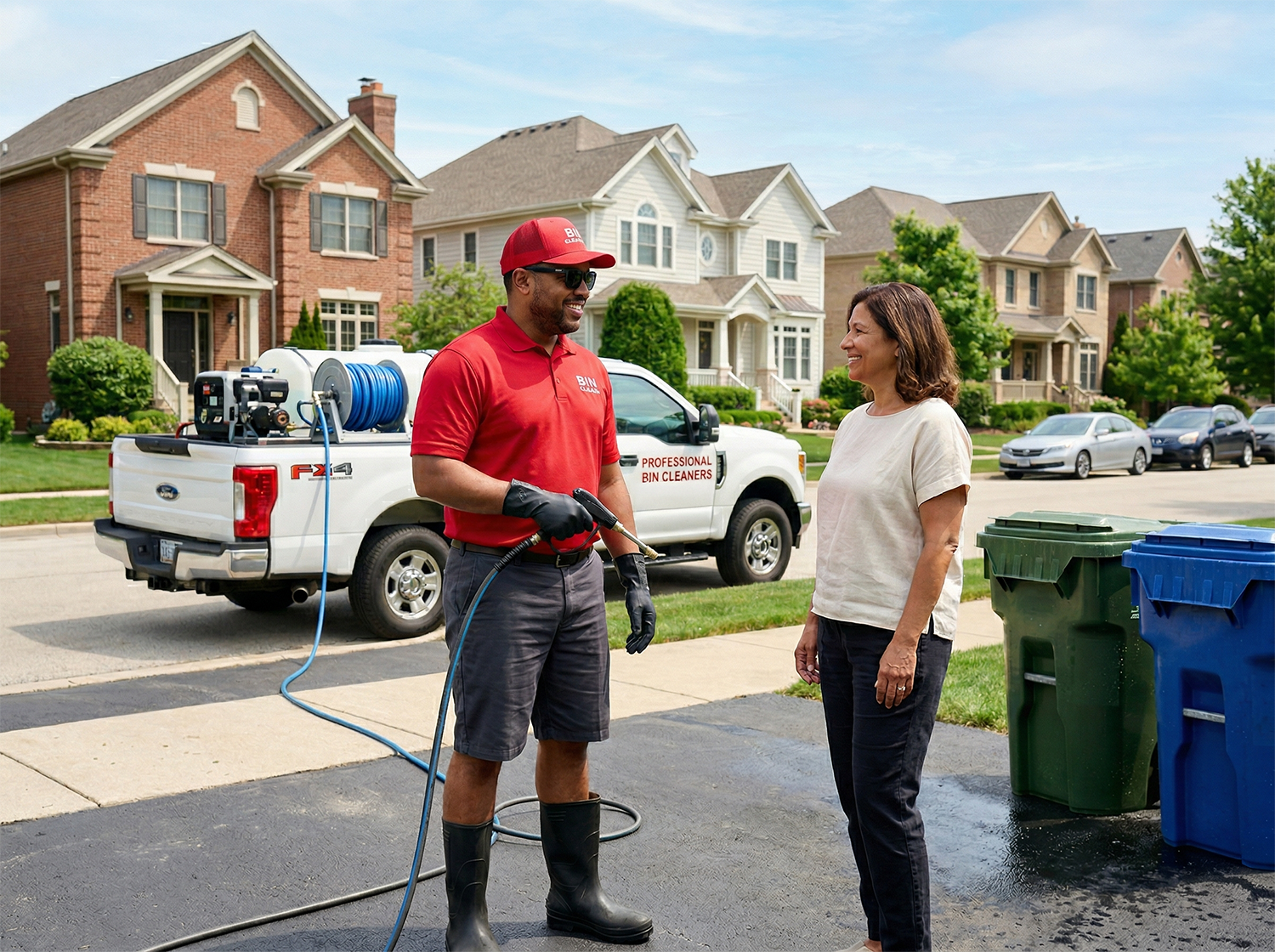
Why Trash Can Cleaning Works as a Business
Every household has trash cans. Every trash can gets used every week. Without regular cleaning, the combination of food waste, bacteria, heat, and moisture turns a standard residential trash can into something genuinely unpleasant. Most homeowners know this and deal with it by ignoring it. A small but growing number would rather pay someone to handle it.
What makes this category interesting right now is the gap between the demand and the number of operators serving it. In many US markets, trash can cleaning is still underserved or served by only a handful of operators. That gap is an opportunity for someone who gets in early and builds a dense residential route. Some larger cities are getting more competitive, but in most suburban and mid-size markets there's genuine room.
Climate amplifies it. In Southern markets where summer temperatures routinely reach 90 degrees and above, a trash can that sits in direct sunlight between collections becomes a significant problem quickly. Bacteria, maggots, and odor develop fast. The urgency is real and the value of a regular clean is immediately obvious to anyone who has dealt with it.
The recurring model is about as clean as it gets in service businesses. The can gets collected. It gets dirty again. You clean it. Repeat. A client who signs up for monthly service stays on the schedule without prompting. No grass growing back, no pool chemistry shifting. The service need is mechanical and predictable.
Is This the Right Business for You?
Trash can cleaning is physical outdoor work. You'll be handling dirty cans, operating pressure washing equipment, and working through residential streets in all kinds of weather. If that's manageable rather than off-putting, it's worth pursuing.
The work itself is repetitive and routine once you have a system. That's actually a feature rather than a drawback. A tight route of regular clients on a fixed schedule is a predictable working day. You know where you're going, what you're doing, and roughly what you're earning before you leave the house.
Route density is the thing that separates a good day from a great one in this business. The closer your clients are to each other, the more cans you can clean in a day and the more efficient your route becomes. Thinking about density from day one, rather than just taking whoever calls, makes the business significantly more profitable as it grows.
If you want a business that runs on a routine, builds predictably, and gets easier to manage as the route fills up, this is a genuinely good fit.
Research and Plan Before You Start
A one-page execution summary before you spend anything is worth the time.
Where will you operate? Define your starting area tightly. A dense cluster of residential streets is the ideal starting point. The closer your clients are to each other, the less time between jobs and the more cans you can clean in a day. Route density is what turns a decent day rate into a strong one. Resist the temptation to take clients across town in the early months.
What collection days apply in your area? Most US municipalities assign collection days by street or zone. Trash can cleaning works best timed after collection, when the cans are empty. Different streets in the same neighborhood often have different collection days. Mapping the collection schedule in your target area before you build your route saves significant headaches later.
What does the local market look like? Search for trash can cleaning services in your area. If there are established operators, that confirms demand exists. Understand what they charge and how they present. If there are no operators yet, that's either a genuine gap or an indication the market needs education. A few posts in local neighborhood Facebook groups or Nextdoor will tell you quickly which it is.
Who else can you serve? Residential streets are the starting point. HOA communities are worth understanding, as many have shared dumpsters or mandated cleanliness standards. Apartment complexes with communal bins are a commercial opportunity that can be high value per visit. Restaurants and food businesses have bins that get extremely dirty quickly and often have hygiene obligations that make a reliable service attractive.
The Subscription Model in Trash Can Cleaning
Trash can cleaning might be the most natural subscription service there is. The can gets collected. It gets dirty again. You clean it. The cycle repeats automatically without any decision from the client.
Most residential clients want a monthly service timed after their regular collection day. For clients with heavy use, particularly families with young children or pet owners, every-two-weeks is a natural premium tier. The deep clean option, with antibacterial treatment and deodorizing, suits clients who want more thorough sanitization.
The operational model after sign-up is about as close to automated as a service business gets. The client subscribes. Payment processes on the billing date. You show up on schedule after collection day, clean the cans, mark it done. No back and forth. No invoicing. No reminders. Building toward that kind of route takes consistent prospecting early on, but once established it runs with much less ongoing effort than most service businesses.
One detail worth knowing: some operators leave a small sticker on the can lid after each service showing the date of the last clean and when the next visit is due. It's a visible reminder to the client and a passive advertisement to every neighbor who puts their own can out on collection day. A simple and effective approach worth adopting from your first client.
Startup Costs and Equipment Options
Trash can cleaning has more range than most service businesses when it comes to startup cost. The professional end uses purpose-built trailer systems designed specifically for the work. The accessible end uses a pressure washer setup in the back of a truck or van. Both can run a real business. The right choice depends on your starting budget and your ambitions for scale.
Purpose-built trash can cleaning trailers. Companies like Spitjet and others manufacture trailers specifically designed for this work. Complete professional systems with dedicated can-tipping mechanisms, hot water, and wastewater containment run $30,000 to $50,000 and above. These are built for efficiency at scale, and the established operators running large routes tend to use them. It's a significant upfront investment, but it's designed for the work.
Pressure washer setup in a truck or van. A far more accessible starting point. A quality gas pressure washer, a water tank, and a suitable vehicle. You clean the cans manually with the pressure washer rather than through an automated tipping system. It takes longer per can than a purpose-built trailer, but it works, it's affordable to start, and it lets you build a client base before committing to a larger investment. This is the right starting point for most new operators.
Here's a realistic breakdown for a pressure washer-based starting setup:
- Business registration (LLC or DBA filing) — $50 to $200 depending on your state
- EIN from the IRS — Free
- General liability insurance — $500 to $1,000 per year
- Gas pressure washer (commercial quality) — $600 to $2,000
- Water tank (50 to 100 gallon) — $150 to $400
- Tank pump and fittings — $100 to $300
- Cleaning chemicals and deodorizer — $100 to $250
- Wastewater containment mat or tray — $100 to $250
- Protective gear (gloves, apron, boots, eye protection) — $100 to $200
- Service stickers for next clean reminder — $50 to $100
- Branded clothing — $75 to $150
- Vehicle signage — $200 to $500
- Door hangers and flyers — $100 to $200
- Domain name (.com) — $15 to $20 per year
- Platform or payment system — $18 to $39 per month
- Logo and basic branding — $0 if you use AI tools, $150 to $400 if you use a designer
A realistic all-in starting figure for a pressure washer setup is $2,500 to $5,000, not including your vehicle. Start here, build the route, and let the upgrade to a professional trailer system be funded by the business once the income supports it.
Your Brand
Trash can cleaning is a visible business. Your vehicle is on residential streets during the day, the sticker you leave on cleaned cans is a small advertisement that neighbors see every collection day, and a professional setup signals that this is a real business rather than a side hustle. A consistent brand works harder for you here than in some other service categories.
Before you settle on a name, run the standard checks:
State business name register. Your state's Secretary of State website. If it's taken, move on.
Federal trade marks. A quick check at USPTO.gov before you invest in signage and materials.
Domain availability. A .com. Check it before you commit to the name.
Social handles. Instagram and Facebook at the same time. When the name, domain, and handles all align, register everything and move on.
On logos:
Create a professional logo for [Business Name], a residential trash can cleaning business. Keep it clean and bold. Use [color preference]. It needs to work on a truck door, a work shirt, and a small service sticker. Provide 3 or 4 variations.
When you're ready to go further:
Create a brand guide for [Business Name], a residential trash can cleaning business. Include a primary color palette with hex codes, a secondary palette, font recommendations for headings and body text, logo usage rules, and how the brand should appear on vehicle signage, uniforms, door hangers, and social media.
Insurance and Business Setup
We're not lawyers or insurance brokers. Get specific advice for your situation. Here's what's worth sorting out before you start.
General liability insurance. You're operating pressure washing equipment on or near residential properties. Wastewater runoff, damage to driveways or landscaping, slip hazards. General liability insurance covers you when something goes wrong. Get it before your first job.
Wastewater disposal. The water that comes off a trash can clean contains bacteria, food waste residue, and cleaning chemicals. In many areas this drains to the curb and street, but local regulations vary and may restrict runoff containing cleaning chemicals into storm drains. Check what applies in your municipality before you start. A wastewater containment mat that lets you contain and dispose of the water more deliberately is a straightforward solution and worth having in your setup regardless.
Business structure. Talk to a free SCORE mentor or your local SBDC before you decide on structure. A brief conversation about sole proprietor versus LLC is worth having before you take your first client.
Vehicle and equipment insurance. Your pressure washer and water tank are a real investment. Confirm your vehicle policy covers commercial use and that your equipment is covered.
Define Your Services and Pricing
The goal is a clear, fixed-price menu that clients can choose from and sign up for without any back and forth. Trash can cleaning is one of the most naturally productized services there is. The variables are the number of cans and the service frequency. Define those clearly and most clients can self-select.
Residential services:
- Residential Trash Can Clean. Your core recurring service. High-pressure wash inside and out, deodorizing treatment. Priced by number of cans: 1 can, 2 cans, 3 cans. Monthly, timed after collection day. This is what most residential clients want.
- Residential Deep Clean. Everything in the standard clean plus antibacterial treatment and pest deterrent. Every two weeks. A natural premium tier for families with young children, pet owners, or clients in warmer climates where standard monthly cleaning isn't keeping up.
Commercial services:
- Small Business Trash Can Clean. For cafes, small offices, and retail. Includes deodorizing and sanitization. Every two weeks. Priced by number of cans: up to 3, up to 5, up to 8. Scheduled after collection.
- Commercial Trash Can Clean. For restaurants, larger offices, and warehouses. Includes grease removal where needed. Weekly. Priced by number of cans: up to 10, up to 15, up to 20. Scheduled outside business hours. For 20+ cans or custom arrangements, a private subscription invite with a custom price keeps the arrangement clean without cluttering your public page.
On pricing: look at what operators in your area charge where they exist, and understand your own costs. Factor in your chemicals, water, fuel, and time per can including travel between jobs. Your floor is your real cost. Price above it in the middle of your local market.
Monthly residential clients on automatic billing are your most valuable client type. Price the standard monthly option to make it an easy yes for a homeowner who knows how bad a summer trash can smells. The deep clean tier is a natural upsell once someone has experienced the standard service.
This is what ServiceSubscriber does.
A page, payments, and delivery tracking. Live in 20 minutes.
14-day free trial. No credit card.

Route Density: Think About It Early
On day one with a handful of clients this isn't a pressing concern. As the business grows it becomes one of the most important levers you have.
The difference between a route where clients are clustered tightly and one where they're scattered across a wide area is significant in terms of how many cans you can clean in a day and what your effective hourly rate looks like. Drive time between jobs is time you're not getting paid for.
A few things worth keeping in mind as you build:
Prioritize density over reach. Ten clients on the same street are worth more than twenty clients spread across ten different neighborhoods. When you're prospecting, focus your early efforts on areas where you already have clients. A second client on a street you already service costs almost nothing in additional travel time.
Collection days matter. Residential clients want their cans cleaned shortly after collection day when the cans are empty. Different streets in the same area often have different collection days. Know the collection schedule and build your route around it. Cleaning a can before it's been emptied is a wasted visit.
Think about where to prospect next. When you take on a new client, consider whether they're in an area where you're likely to pick up more. A concentrated area you can build out is more valuable long-term than a scattered one-off client far from the rest of your route.
Getting Your First Clients
Every residential lot is a prospect. The challenge in trash can cleaning isn't finding people who might want the service. It's making them aware it exists and making it easy to sign up.
Door hangers timed to collection day. Particularly effective in this category because you can time your drop to collection day morning, when the cans are sitting at the curb and the evidence of why the service exists is right there. A flyer on the door with what you do, what you charge, and a QR code to your page. Drop 300 in your target streets on collection day morning and the connection between the flyer and the problem is immediate.
Nextdoor. Introduce yourself in local neighborhood feeds. Be specific about where you operate, what you offer, and what you charge. Before and after photos are extremely effective in this category. A cleaned can next to a dirty one is an obvious, compelling image. Ask satisfied clients to post a recommendation.
Local Facebook groups. Post your work. Be helpful. Show up consistently. The category is unfamiliar enough that a good post explaining what you do and why tends to generate genuine curiosity.
HOA communities. Neighborhoods with HOA standards around exterior maintenance are good prospecting territory. Introduce yourself to HOA management or post on the community board. Shared dumpsters or communal trash areas in managed communities can be a commercial opportunity worth pursuing once you have a few residential clients as references.
Restaurants, cafes, and food businesses. Food businesses generate genuinely foul bin waste quickly, particularly in summer. A direct introduction to the owner or manager with clear pricing is often enough. These clients tend to want a reliable regular service and pay without fuss.
Ask for referrals. A client with a clean can on a street full of dirty ones is perfectly placed to recommend you to a neighbor. Ask after the first service.
Give Customers a Way to Sign Up
When someone scans your QR code from a door hanger or finds you through Nextdoor, they should land somewhere that shows what you offer, what you charge, and lets them sign up without having to call you or wait for a response.
The entire experience after sign-up should be automatic. Client signs up, payment processes on the billing date, you show up on schedule, clean the cans, mark it done. No back and forth. No invoicing. No reminders. The service runs on its own.
Here's an example of what that looks like in practice:
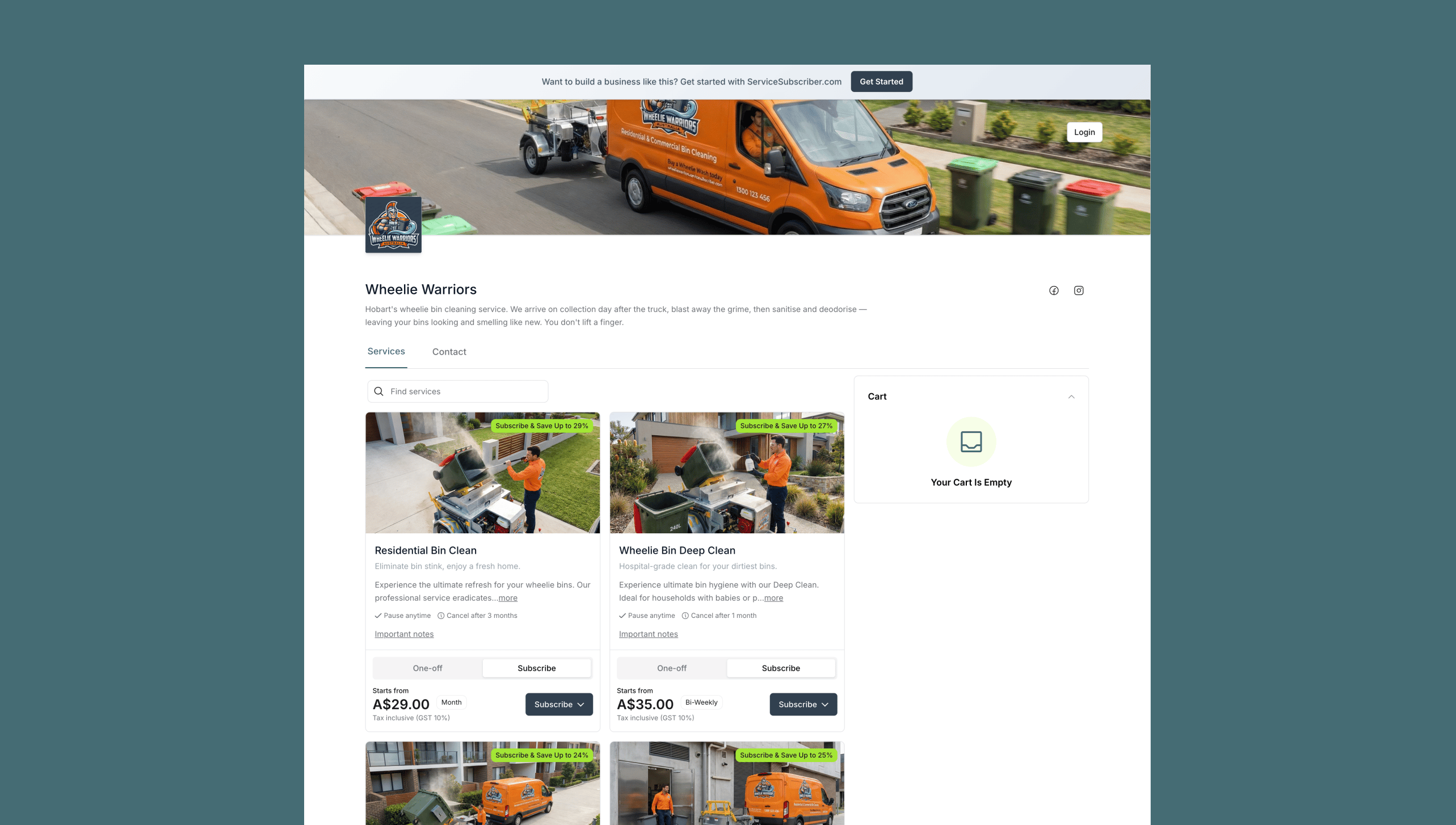
Services and pricing upfront. Clients choose their number of cans and frequency, sign up, and pay at checkout. You get notified. You add them to your route. For commercial clients or non-standard arrangements, a private subscription invite with a custom price keeps things clean without cluttering your public page.
Make the First Clean Count
The result of a trash can clean is immediately obvious to the client and visible to neighbors. Both work in your favor.
Do a thorough job. Inside, outside, and the lid. Deodorize as a finish. A can that smells clean after the service is the detail clients notice and mention when they recommend you.
Leave the service sticker. A sticker on the lid showing the date of the last clean and when the next service is due. Simple, professional, and a constant visible reminder to the client and their neighbors that this service exists.
Return the can neatly. Leave it where the client had it, lid closed. A small detail that signals care and professionalism.
The neighbors will notice. A clean can next to uncleaned cans on collection day is exactly the contrast that prompts a neighbor to ask about it. Do the work well and let the result do the prospecting.
Getting Paid Consistently
Trash can cleaning on a recurring schedule is about as close to automated income as a service business gets. The client signs up. The payment processes on the billing date. You show up on schedule, clean the cans, mark it done. No invoice to send. No payment to chase. No wondering whether the client will reach out again.
As the route grows, that predictability compounds. A full schedule of regular clients gives you a known income figure before you leave the house. That's a materially different position than a service business where every week starts from zero.
Build the route with recurring scheduled payments as the default from the start. One-off cleans are a natural entry point but position them as a first step toward a regular schedule rather than a standalone offering. Most clients who get a good first clean and find the sign-up process easy will commit to a regular service.
Putting It Together
Trash can cleaning is one of the more straightforward service businesses to build recurring income from. The demand is real and growing. Competition in most US markets is light. And the service has a natural recurring cadence that requires almost no effort to maintain once a client is signed up.
Start with a pressure washer setup if budget is a concern. Build the route. Let the upgrade to a professional trailer system be funded by the business once the income is there to support it. Keep your service area tight. Get your page live before you drop the first door hanger. Price clearly and make the regular service the default option. Leave the sticker. Do the work well enough that the neighbors ask about it.
That's the starting point. The rest builds from doing the rounds.
Ready to start your trash can cleaning business?
Create your service page, share the link, and start building your route. Clients sign up, payment processes automatically, and you show up on schedule.
14-day free trial. No credit card. 50% off first 3 months.
Did you find this guide helpful?
More guides
Explore other service businesses you can start

How to Start a Service Business
The complete starting point for any service business.
Read guide
How to Start a Pressure Washing Business
Similar equipment, different surfaces, strong local demand.
Read guide
How to Start a Lawn Care Business
Another recurring residential service in the same neighborhoods.
Read guide